


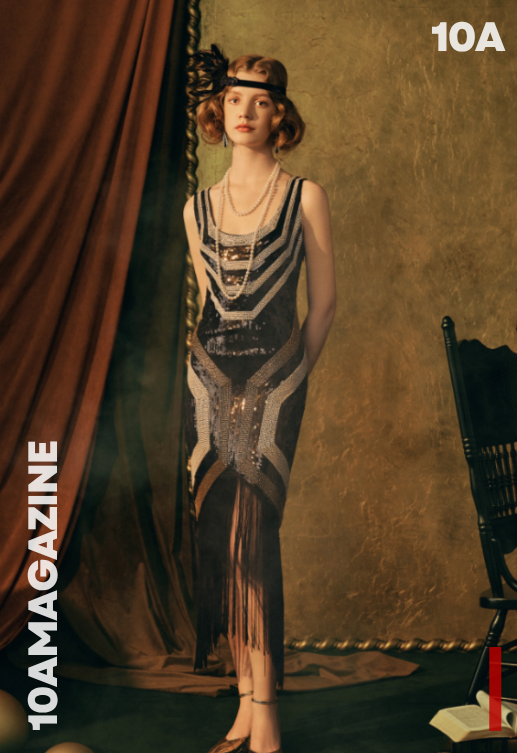
The Art Deco movement flourished between roughly 1920 and 1940, born from a collision of modernist ambition and post-war hunger for beauty. Emerging from the 1925 Exposition Internationale des Arts Décoratifs et Industriels Modernes in Paris, it embraced symmetry, bold geometry, rich ornamentation, and the promise of industrial progress. Fashion was among its most expressive languages, and the Art Deco dress remains one of the most recognizable garments in fashion history.
Origins & Historical Context
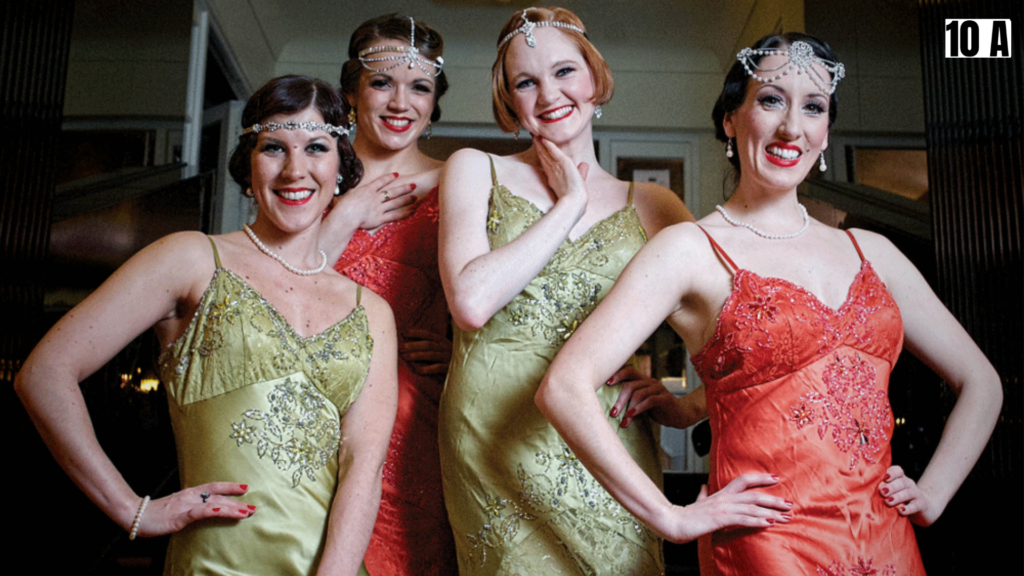
Before Art Deco fully took shape, designer Paul Poiret liberated the female silhouette from the corset in the 1910s, paving the way for fluid column dresses. The 1920s then brought the iconic flapper dress dropped waists, fringe, beading, and chevron patterns defined the Roaring Twenties. By the 1930s, the silhouette grew more refined: bias-cut gowns by Madeleine Vionnet emphasized the body’s natural geometry using silk and lamé. The style has since seen multiple revivals, most notably in the 1960s nostalgia wave and again in the 2010s through bridal and red-carpet fashion.
Key Defining Characteristics
An Art Deco dress is recognizable by a constellation of design decisions working in harmony:
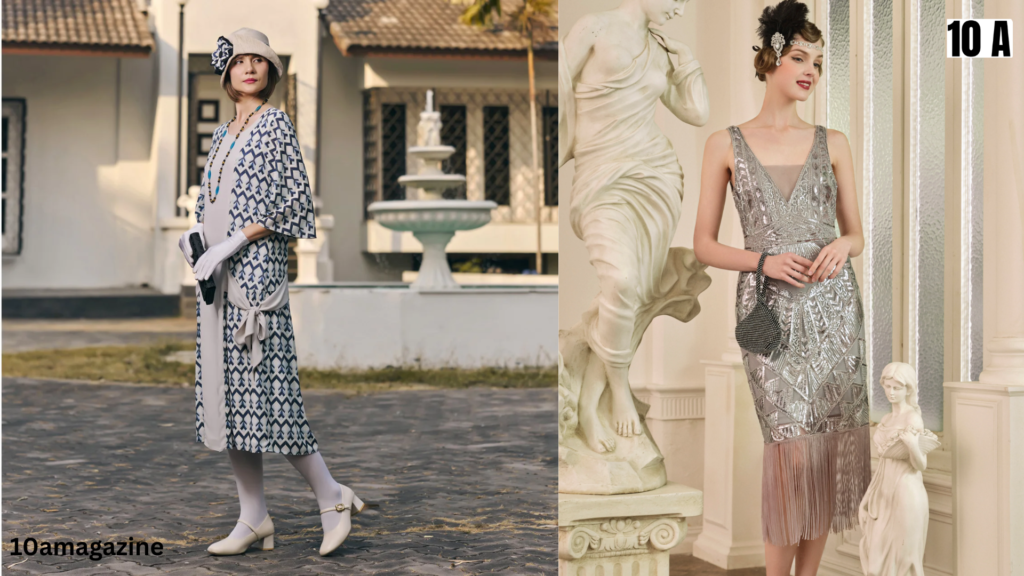
- Geometric ornamentation chevrons, sunbursts, stepped pyramids, and fan motifs derived from Cubism and Egyptian revival art, executed through beading or embroidery
- Luxurious fabrics silk charmeuse, lamé, velvet, and heavy chiffon, where fabric weight determined how geometric lines translated to the body in motion
- Streamlined silhouette dropped waistlines in the 1920s gave way to the bias-cut column in the 1930s, both prioritizing the vertical line and elongation
- Metallic and contrasting palette black and gold, navy and silver, ivory and jet; high-contrast pairings that amplify geometric embellishment
- Architectural detailing structured necklines, geometric cutouts, and deliberate asymmetry reflecting the era’s obsession with engineering
- Embellishment techniques seed beading, bugle beads, sequins, and metallic threadwork requiring hundreds of hours of skilled craft
The Core Tradeoffs in Design
Every designer or wearer navigates a set of fundamental tensions. These tradeoffs are not flaws they are the creative challenges that give the garment its character.
The first is between wearability and visual impact. Heavy beadwork delivers extraordinary visual richness but adds significant weight a fully beaded 1920s flapper dress can weigh several kilograms, restricting natural movement. Lighter interpretations using printed geometric fabric preserve the aesthetic while improving comfort, but sacrifice the tactile and light-catching quality of true embellishment.
The second tension lies between authenticity and accessibility. Genuine period pieces or faithful reproductions require rare craftsmanship at considerable cost. Contemporary Art Deco-inspired dresses reach a wider audience through modern production but inevitably dilute the complexity of original forms.
A third tradeoff concerns the body and the design. Art Deco dresses were originally conceived for specific body ideals of their era the lean, narrow-hipped silhouette celebrated in the 1920s. Adapting these geometric, often unforgiving cuts for a diverse range of bodies requires thoughtful construction changes that may alter the visual grammar of the original design.
Cultural & Contextual Impact
The Art Deco dress was never politically neutral. It emerged as women were entering the workforce in greater numbers, gaining voting rights, and renegotiating their social roles. The dropped waist, bobbed silhouette, and rejection of restrictive corseting were sartorial arguments about freedom and modernity.
The style also carried complex implications around class and colonialism. The Egyptomania that pervaded Art Deco triggered by the 1922 discovery of Tutankhamun’s tomb drew from non-Western cultures in ways that today prompt legitimate questions about appropriation versus influence. Similarly, motifs borrowed from Japan, Persia, and Sub-Saharan Africa were filtered through a specifically European modernist lens. Thoughtful engagement with the style’s history enriches rather than diminishes its appeal.
Challenges for Contemporary Interpretations
Bringing Art Deco aesthetics into current fashion presents distinctive challenges. Sustainability is perhaps the most pressing: the original style depended on materials exotic feathers, certain dyes, hand-beading at enormous scale that are either environmentally costly or ethically problematic today.
There is also the challenge of avoiding pastiche. A dress that borrows Art Deco motifs without understanding their structural and cultural logic risks becoming costume rather than fashion. The most successful contemporary interpretations treat the style as a vocabulary to be spoken fluently, not merely quoted.
Finally, sizing and inclusivity remain ongoing challenges. The geometric constraints that define the style can be difficult to scale across diverse bodies without compromising the proportions that give the design its coherence. Progressive pattern-making techniques are actively expanding what an Art Deco dress can look like on a wider range of wearers.
FAQ
1. What makes a dress “Art Deco” rather than simply vintage or retro? A dress is genuinely Art Deco when it deliberately employs the movement’s core visual language: geometric ornamentation, high-contrast metallic palettes, a streamlined vertical silhouette, and decorative techniques arranged in symmetrical or stepped patterns. Merely being old or using sequins does not make a garment Art Deco. The defining characteristic is the intentional, structured application of geometric modernist principles to the entire design from cut to embellishment to fabric choice.
2. How do I distinguish an authentic period Art Deco dress from a modern reproduction?
Authentic period pieces typically reveal themselves through hand-sewn seed or bugle beads with slight irregularities, silk or rayon charmeuse with a specific drape and patina, French seams and hand-stitched hems, and the absence of synthetic fabrics. Couture house labels (Callot Soeurs, Vionnet, Lanvin) are significant provenance markers. Modern reproductions use machine-stitched embellishment, synthetic fabrics, and modern closures like invisible zippers.
3. What occasions are Art Deco dresses appropriate for today?
Heavily beaded column gowns suit black-tie events, galas, and awards ceremonies, while Art Deco-inspired cocktail dresses work well for weddings, evening parties, and theatre. The style has gained significant traction in bridal fashion as well. For daytime wear, Art Deco-inspired prints on lighter fabrics offer a more accessible interpretation for garden parties or cultural events.
4. How should I care for a beaded Art Deco dress?
Machine washing is almost universally inappropriate agitation can break threads, detach beads, and distort bias-cut fabric. Dry cleaning by a specialist in vintage or couture textiles is strongly recommended for any beaded piece. Storage should be in acid-free tissue paper, laid flat or on padded hangers, away from direct light and moisture. Inspect beading regularly for loose threads and repair promptly to prevent cascading loss.
5. Is the Art Deco dress relevant in contemporary sustainable fashion?
Authentic vintage pieces represent the opposite of fast fashion: durable, timelessly elegant, and already produced, making their continued wear genuinely sustainable. New production of Art Deco-inspired pieces raises more questions around embellishment materials, labour conditions for hand-beading, and fabric sourcing. A growing cohort of sustainable designers is addressing this using recycled beads, organic silk, and transparent supply chains proving that aesthetic ambition and ethical responsibility are not mutually exclusive.
6. How has the Art Deco dress influenced modern fashion designers?
The influence is profound and ongoing. Designers regularly return to its vocabulary of geometric beading, bias-cut drape, and metallic palette Versace’s Medusa-accented columns, Elie Saab’s embellished evening gowns, and bridal collections by Vera Wang and Jenny Packham all carry clear Art Deco DNA. The Great Gatsby’s cultural revival in the 2010s brought a mass-market wave, while high fashion continued engaging with the style at a more nuanced, craft-focused level.