



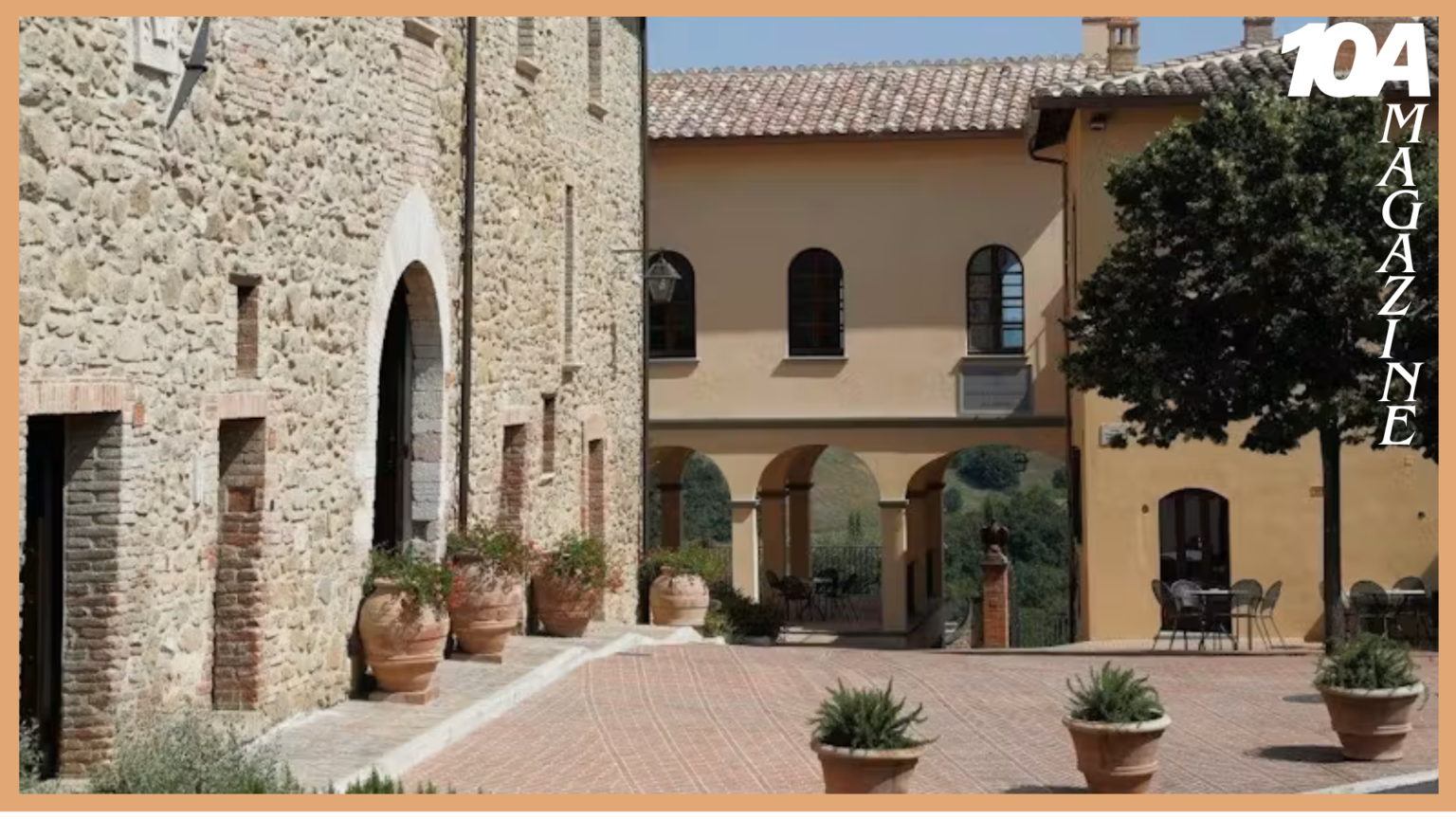
What Is Solomeo, Umbria And Why Should You Care?
Let’s be honest. Italy has a lot of beautiful hilltop villages. Like, an embarrassing number of them. You round a corner on a winding Umbrian road and there’s another stone tower with another jaw-dropping view, and you start to wonder if the whole country is just one continuous postcard.
But Solomeo Umbria is different. And the reason why is one of the most unexpected stories in modern Italy.
This tiny medieval hamlet, sitting at 273 metres above sea level in the Province of Perugia, had every reason to become one of Italy’s many abandoned ghost towns. According to a 2016 census, nearly 2,500 rural Italian villages had become depopulated due to urbanization and economic decline. Solomeo was heading in that same direction.
Then came a man with cashmere, a philosophy degree’s worth of ideals, and a lot of money.
The Man Behind the Village: Brunello Cucinelli
You cannot talk about Solomeo without talking about Brunello Cucinelli. And you cannot talk about Brunello Cucinelli without immediately wanting to reread everything Marcus Aurelius ever wrote.
Cucinelli is the founder of his global luxury fashion brand — famous for cashmere knitwear that costs roughly as much as a decent used car. But the man himself is far more interested in philosophy than price tags.
He grew up in the Umbrian region as the son of a farmer. In 1985, he moved his company to Solomeo, a move that would define the next four decades of his life. What began as a business decision slowly became something much bigger — a personal mission to preserve the soul of an Italian village.
As he told Grazia USA: “We built our lives and the company here in hopes of preserving the values that we cherished so much growing up, of tradition and family.”
His dream, in his own words, was “to work for the moral and economic dignity of the human being” — a company that makes a profit “with ethics and respect of human beings.”
Easy to say. Hard to actually do. Cucinelli actually did it.
Sources:
A Brief History of Solomeo Umbria
Solomeo’s story didn’t start with cashmere. It started in the 14th century.
According to historical records, the fortress of Solomeo was officially commissioned on 7 September 1391 by the magistracy of Perugia. In 1402, the village was sacked and heavily damaged by papal Florentine troops — though Perugian residents recovered it that same year.
The Church of Saint Bartholomew, which still stands today, dates back to the 12th century. The castle was built shortly after to protect villagers from the raids that were, apparently, something of a regular Tuesday in medieval Italy.
For centuries, Solomeo remained a quiet backwater between Perugia and Lake Trasimeno. Beautiful, yes — but slowly fading. That is, until the 1980s.
Source: Wikipedia – Solomeo
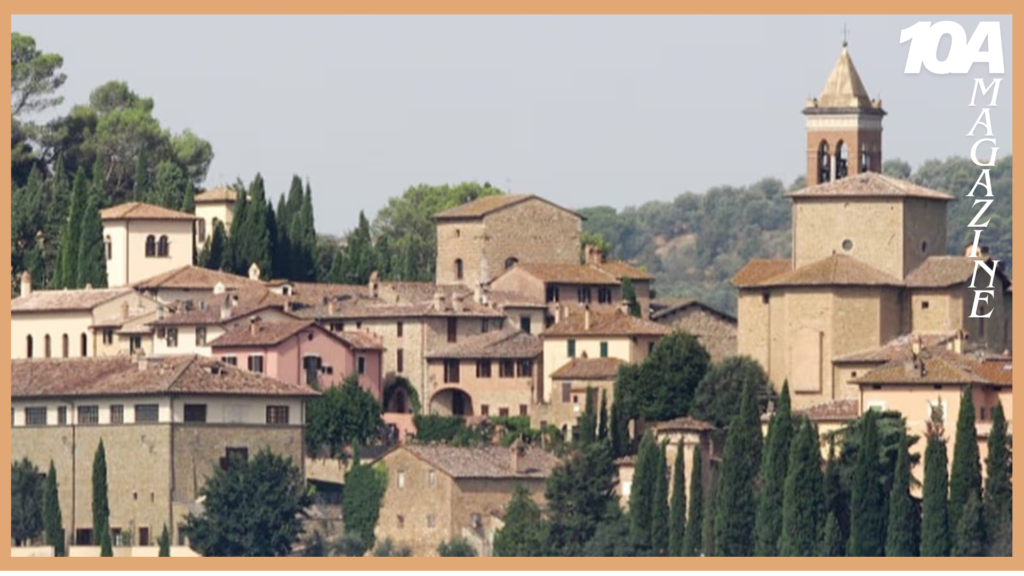
The Restoration: Turning a Ghost Town Into a Living Museum
Since 1985, Brunello Cucinelli has invested tens of millions of euros into restoring Solomeo — not to make it a tourist trap, but to give it real, living purpose.
The restoration project is remarkable for what it didn’t do. There are no tacky souvenir shops. No tour buses blocking narrow lanes. Instead, Cucinelli rebuilt Solomeo the way it deserved to be rebuilt — with patience, craftsmanship, and genuine respect for what was already there.
Today, the village is home to roughly 711 residents (as of 2021 census data), and around 1,000 artisans who work producing Cucinelli’s luxury cashmere garments — in a village that itself is barely larger than a few city blocks. That’s a pretty remarkable ratio of craftspeople to cobblestones.
The restoration includes:
- The Medieval Castle — now houses part of Cucinelli’s company headquarters
- The Church of Saint Bartholomew — carefully restored, still active
- The Foro delle Arti — a cultural forum inspired by British artists William Morris and John Ruskin
- Teatro Cucinelli — a Renaissance-style theatre opened in 2001, seating over 200 people, hosting prestigious cultural events
- The Philosophers’ Garden — a contemplative green space for quiet reflection
- A 100-hectare green belt — surrounding the village with orchards, meadows, and vineyards that recall the painted Umbrian landscapes of Perugino
In 2010, Cucinelli and his wife Federica established The Brunello and Federica Cucinelli Foundation, dedicated to preserving the land and historic monuments of Solomeo.
Sources:
What to See and Do in Solomeo
You can walk all of Solomeo in about 20 minutes. But that’s a bit like saying you can read the Sistine Chapel ceiling in 20 minutes. Technically true, deeply missing the point.
Here’s what to actually do when you visit:
1. Piazza della Pace
Start here. This is the heart of the village, where the restored medieval buildings form a quiet square that feels like it belongs in a different century — because it mostly does. Sit down, breathe, pretend you’re in a Merchant Ivory film. It costs nothing.
2. The Castello di Solomeo
The castle at the centre of the hamlet is one of the oldest structures in the village. It’s also where part of the Cucinelli company operates — which makes it probably the only medieval castle in Europe actively used for luxury fashion production. As concepts go, it’s hard to beat.
3. Teatro Cucinelli and the Foro delle Arti
The Teatro Cucinelli is the centrepiece of the Foro delle Arti complex. Inspired by the Farnese Theatre in Parma and the ancient theatre of Sabbioneta, it hosts music, theatre, and cultural performances. The outdoor Amphitheatre beside it is used for summer festivals. Check the official Solomeo website for current events.
4. The Philosophers’ Garden
This is a quiet landscaped garden where you can sit among trees and… think. No phones, no pressure. Just Umbrian countryside views and whatever philosophical crisis you’ve been quietly carrying since 2020. Cucinelli would approve.
5. The Brunello Cucinelli Store
Yes, there’s a shop. No, you probably can’t afford most of it. But it’s worth a look — the store stocks the latest collection and the interior is as beautifully designed as the rest of the village. Consider it a very expensive museum where you’re allowed to touch the exhibits.
6. Da Valter a Solomeo Restaurant
Walk past Brunello’s house and you’ll find this gem — a wonderfully eccentric restaurant with a seriously impressive wine list. In summer, tables spill out onto the lawn. In winter, there’s an open grill with sausages. Either way, it’s one of the most enjoyable dining experiences in all of Umbria.
7. The Annual Medieval Festival
Time your visit right and you’ll catch the village’s annual medieval festival — when the entire village dresses up in period costume (naturally, in Cucinelli), pied pipers walk the streets, and the whole thing feels wonderfully, joyfully theatrical.
Sources:
- Bellini Travel’s Guide to Umbria
- Tripadvisor – Best Things to Do in Solomeo
- Posarelli Villas – Discover Solomeo
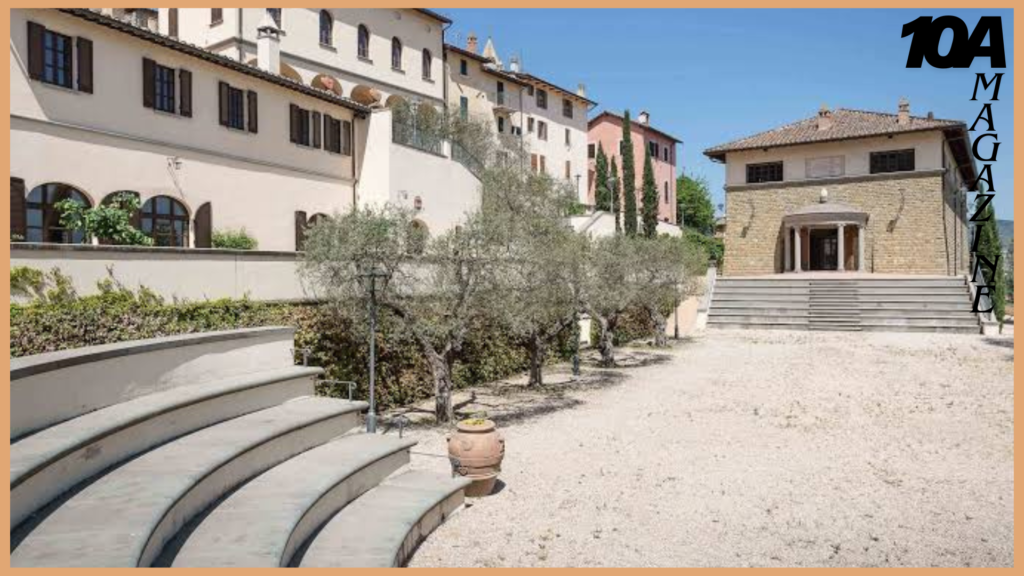
Why Solomeo Umbria Matters — Beyond the Pretty Stones
Here’s the thing that makes Solomeo genuinely interesting, beyond its obvious beauty.
Cucinelli calls his approach “humanistic capitalism.” It’s the idea that business should serve human dignity — that profit and beauty and community can coexist without one destroying the other. In most places, that’s a TED Talk topic. In Solomeo, it’s a lived reality.
The village is a working place. Real people live and work here. The artisans producing cashmere are paid well and work in beautiful surroundings. The landscape is preserved. The architecture is maintained. The culture is alive.
As the travel guide at wheretogoin.net notes, some viewers of Emily in Paris noticed that the fictional Italian village of Solitano bore a striking resemblance to Solomeo — down to its artisan workshops and emphasis on craftsmanship. It’s the kind of place that even screenwriters can’t help but borrow from.
Source: Where to Go In – Umbria Travel Guide
Practical Travel Information for Solomeo Umbria
Location: Frazione of Corciano, Province of Perugia, Umbria, central Italy Coordinates: 43°04′59″N 12°16′39″E Elevation: 273 metres above sea level Distance from Perugia: Approximately 9 km south of Corciano; about 15 km from central Perugia
Getting There: The most practical way to reach Solomeo is by car. It sits roughly between Florence and Rome, making it an excellent stop on a central Italy road trip. The nearest major city is Perugia, which is well connected by rail and road.
When to Visit: Solomeo is worth visiting year-round. In winter, it hosts Christmas markets featuring local artisan products. In summer, the Teatro Cucinelli and Amphitheatre host outdoor performances. The medieval festival worth checking dates for in advance is a particular highlight.
Where to Stay: Nearby accommodation options include:
- Sina Brufani (Perugia)
- Relais dell’Olmo
- Relais Casamassima
All are surrounded by Umbrian vineyards and scenic countryside.
Popular vacation length: Most visits to Solomeo are half-day to full-day trips, typically combined with Perugia and the wider region.
Source: Herein by Marriott – Site for Solomeo
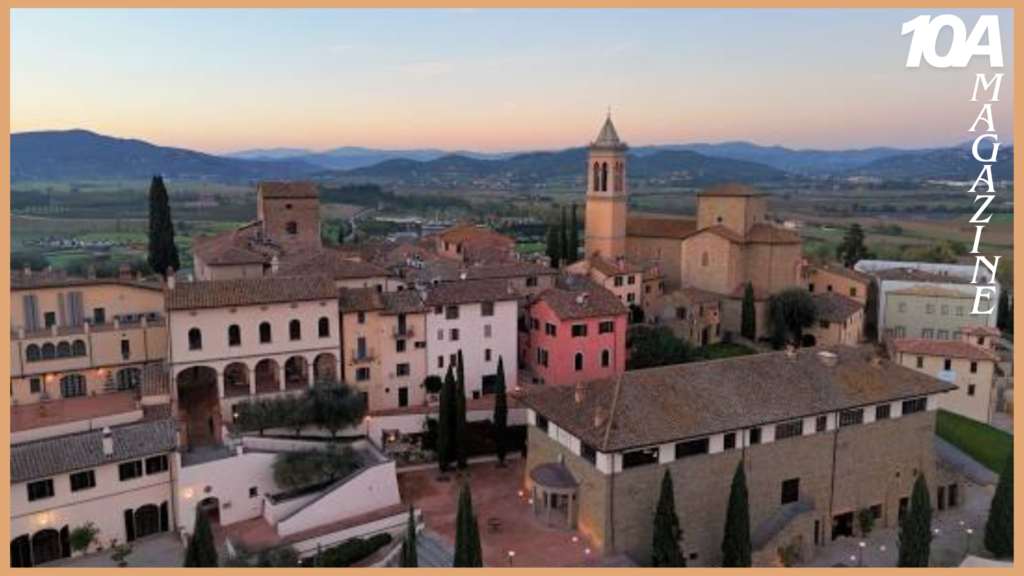
Final Thoughts: Is Solomeo Umbria Worth Visiting?
Short answer: yes, obviously.
Longer answer: Solomeo Umbria is one of those rare places where a great story and great scenery actually match each other. It’s not a theme park recreation of medieval Italy. It’s a real village, with real history, maintained by real people who chose to stay because someone made it worth staying for.
In a world where we talk constantly about sustainability, preservation, and ethical business, Solomeo is the version that actually got built. It’s proof that beauty and commerce don’t have to be enemies — and that a single person with enough conviction can genuinely change the fate of a place.
If you’re planning a trip to Umbria, put Solomeo on the itinerary. Leave enough time to sit in the Piazza della Pace, have a long lunch at Da Valter, and let the place settle over you.