



5 Safe Methods That Actually Work
You were just trying to fix one loose press-on. Now three fingers are glued together, there’s a shiny patch on your cuticle, and you’re Googling this at 11 p.m. with one hand.
Relax. Nail glue on skin is annoying, not dangerous. It happens to almost everyone who does their own nails, and it comes off with things you probably already own.
This guide walks you through how to get nail glue off skin safely, without tearing your skin or panicking over nothing.
Why Nail Glue Sticks to Skin So Fast
Nail glue is built from cyanoacrylate, the same fast-bonding ingredient used in regular super glue. Cyanoacrylate hardens the moment it touches moisture, and human skin is never fully dry. That’s why a single drop can “set” in seconds flat.
The chemical reaction that hardens the glue also releases a small amount of heat, which is why a big spill sometimes feels warm for a second. According to UF Health, cyanoacrylate exposure on skin is not toxic, but it can cause irritation, especially if you try to force it off.
So the glue isn’t the enemy here. Impatience is.
3 Rules Before You Try Anything
- Never pull or peel dried glue off in one go. You’ll take a layer of skin with it.
- Work in a ventilated room if you’re using acetone or nail polish remover — the fumes add up fast in a small bathroom.
- Test any product on a small patch first if you have sensitive skin or eczema.
Keep these in mind, and every method below becomes low-risk.
5 Ways to Get Nail Glue Off Skin
1. Soap and Warm Water (Gentlest Option)
This is the slowest method, but it’s also the kindest to your skin, and it needs zero special products.
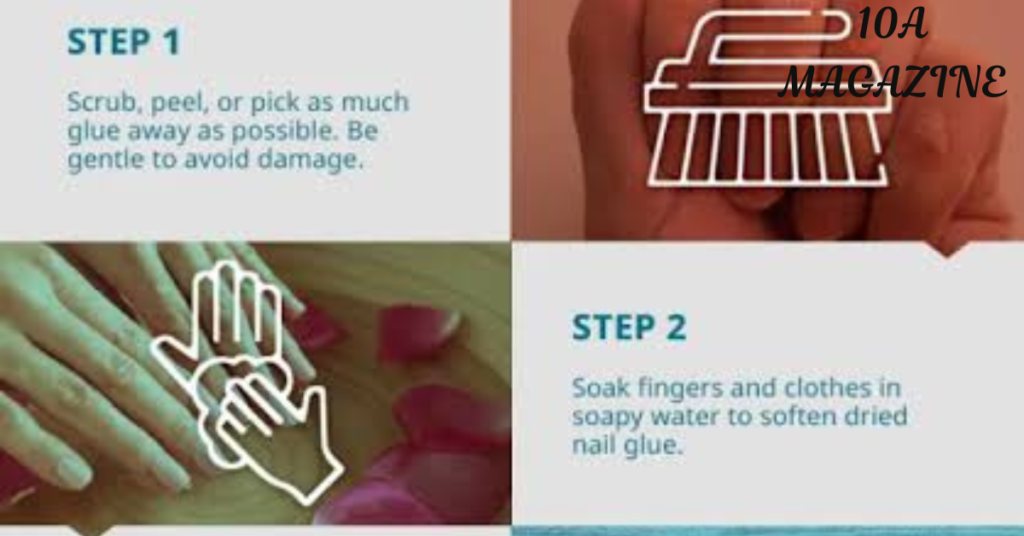
- Fill a bowl with warm, soapy water.
- Soak the glued area for 10–20 minutes.
- Gently rub or roll the softened glue away with your fingers.
L’Oréal Paris recommends this as a first line of defense, especially if you don’t have acetone nearby. It won’t work in seconds, but your skin will thank you later.
2. Acetone-Based Nail Polish Remover (Fastest Option)
Acetone dissolves cyanoacrylate more effectively than almost anything else in your bathroom cabinet.
- Soak a cotton pad or swab in acetone-based remover.
- Press it onto the glued skin for 5–10 minutes.
- Once the glue softens, gently roll or wipe it away — never scrape it with a nail.
- Moisturize right after, since acetone strips natural oils from skin.
This method is backed by both L’Oréal Paris and dermatology sources, but it’s genuinely drying. Don’t use it daily, and skip it on broken or irritated skin.
3. Petroleum Jelly, Cuticle Oil, or Coconut Oil (Best for Sensitive Skin)
Oils don’t dissolve the glue chemically. They lubricate it until it loses grip on your skin, which is oddly satisfying to watch.
- Massage a generous amount of petroleum jelly or oil into the glued spot.
- Keep rubbing in small circles for a few minutes.
- Wash with soap and water once the glue starts balling up and rolling off.
No burning, no fumes, no drama. It’s slower than acetone but a solid choice for kids, sensitive skin, or anywhere near the eyes and lips.
4. Let It Wear Off Naturally
Sometimes the smartest move is to do nothing.
A thin layer of dried nail glue on skin usually sheds on its own within one to two days as your skin’s outer layer naturally renews itself. If it’s a small, non-irritating spot, this is genuinely the safest route.
5. Rubbing Alcohol (A Gentler Middle Ground)
If acetone feels too harsh but soap and water is too slow, rubbing alcohol sits in between. It softens the bond gradually without stripping your skin as aggressively as acetone does. Soak a cotton pad, hold it against the glue for a few minutes, then gently work the residue off.
What NOT to Do
- Don’t yank fingers apart. You can tear skin layers before the glue actually gives way.
- Don’t use sharp tools like scissors, razors, or knives to scrape it off.
- Don’t use acetone near your eyes, mouth, or broken skin.
- Don’t panic-Google and pull at the same time. Seriously, put the phone down and read this first.
Poison control experts back this up directly: pulling bonded skin apart is the actual cause of most glue-related injuries, not the glue itself, according to the Missouri Poison Center.
Nail Glue in Your Eyes or Mouth? Different Rules Apply
Skin is one thing. Eyes and mouths need a completely different, more careful approach.
If glue gets in your eye:
- Do not force your eyelids open.
- Rinse gently with lukewarm water.
- Never use acetone or alcohol near the eye.
- Call Poison Control at 1-800-222-1222 (U.S.) or seek medical care right away.
Poison Control notes that eyelids stuck together from cyanoacrylate usually separate on their own within one to four days, and permanent eye damage from this type of exposure is extremely rare when people avoid forcing it.
If glue gets in your mouth: Rinse with water and let saliva do the work over time. Don’t try to yank it off your teeth or tongue.
This part isn’t optional advice — if there’s any doubt, call a poison control center. It’s free, confidential, and available 24/7.
Aftercare: What to Do Once the Glue Is Gone
Your skin just went through a small chemical tug-of-war. Be a little nice to it.
- Wash the area with mild soap to remove any remaining residue.
- Apply a rich moisturizer or petroleum jelly for a few days.
- Watch for redness, swelling, or peeling that doesn’t calm down within 24–48 hours.
Most irritation from nail glue is mild and temporary. It’s the removal method, not the glue itself, that usually causes lasting damage.
When to See a Doctor
Book an appointment or visit urgent care if you notice:
- Blistering or open wounds
- Swelling that gets worse instead of better
- Signs of infection like pus or spreading redness
- Glue that won’t budge after several days despite gentle attempts
A dermatologist can safely remove stubborn glue without scarring, which is worth the visit if you’re dealing with a large spill or sensitive skin.
Frequently Asked Questions
Is nail glue toxic on skin? No. Brief skin contact with cyanoacrylate-based nail glue isn’t considered toxic — the main risk is irritation from rough removal, not the chemical itself.
Can I use nail glue remover instead of acetone? Yes. Dedicated nail glue removers often contain gentler solvents plus moisturizing ingredients, making them a good middle-ground option.
How long does nail glue take to come off on its own? Usually one to two days for a thin layer, since your skin naturally sheds its outer cells.
Does rubbing alcohol work as well as acetone? It works more slowly but is gentler, making it a good pick for sensitive skin.
Final Thoughts
Nail glue on skin looks worse than it is. Soap, oil, or a little acetone will handle it in most cases — patience is really the only “special ingredient” you need. Skip the eyes and mouth advice above if that’s where the glue landed, and call poison control if you’re ever unsure.
Your next DIY manicure will go smoother. And if it doesn’t, well — now you know exactly what to do.
References Used in This Article
- Poison Control – Is Super Glue Toxic?
- UF Health – Cyanoacrylates
- Missouri Poison Center – Super Glue
- L’Oréal Paris – How to Safely Get Nail Glue Off Your Skin
Free-to-Use Stock Images (No Copyright Issues)
- Unsplash – nail polish/manicure search
- Pexels – press on nails search
- Pixabay – nail glue/manicure search
All three sites offer free images for commercial use without attribution required, but check each image’s specific license before publishing.
A Note on the Instagram Link
I searched for a specific, verifiable Instagram post or reel to embed here, but I couldn’t confirm a real, currently-live link that matches this exact topic closely enough to recommend responsibly — I don’t want to hand you a broken or unrelated embed. Two better options:
- Embed one of your own brand’s Reels if you have one on nail care.
- Search Instagram directly for the hashtag #nailglue and pick a current, relevant post to embed manually in WordPress using the native Instagram block (just paste the post URL).