



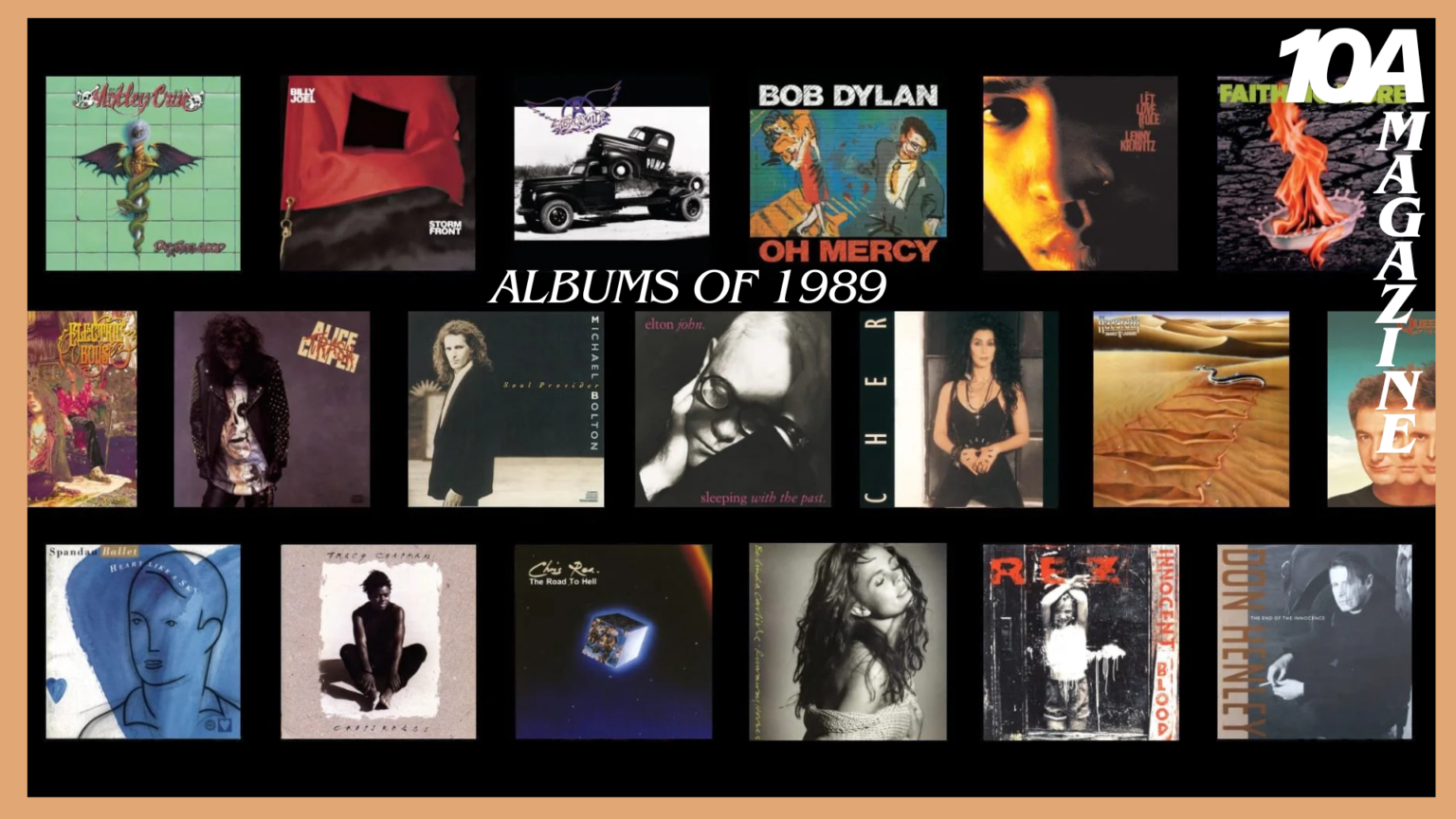
Pop culture loves round numbers, and 1989 deserves one. The Berlin Wall fell. The Cold War cracked. And somewhere in a studio in Boston, a band called Pixies finished an album that would quietly rewrite the rules of rock music.
Music in 1989 didn’t have one sound. It had five or six, all fighting for the same radio dial. Hip-hop grew teeth. Grunge took its first breath. Pop got weirder and bolder. This article walks through the albums 1989 gave us, backed by real chart data and respected music sources, not guesswork.
A Year Music Couldn’t Make Up Its Mind
Here’s the funny part. If you played a Bobby Brown track next to a Pixies track in 1989, you’d think they came from different decades, not the same calendar year. That’s what made the era strange and brilliant.
According to Wikipedia’s chart records, Billboard 200 data compiled by Nielsen Soundscan tracks each album’s weekly physical and digital sales, and in 1989 alone, fifteen different albums reached the number one spot. That’s a lot of turnover for one year. No single artist owned 1989. The year itself did.
The Chart-Topping Albums of 1989
Let’s start with what people actually bought, since sales tell their own honest story.
Bobby Brown’s “Don’t Be Cruel” was the best-performing and best-selling album of 1989, spending six non-consecutive weeks at number one. Brown turned New Edition’s clean-cut image into something edgier and more adult, and the gamble paid off in record stores nationwide.
Fine Young Cannibals had a similar breakout moment. Their second album, “The Raw & the Cooked,” held the longest unbroken run at number one among 1989 releases, spending seven consecutive weeks at the top. “She Drives Me Crazy” and “Good Thing” still get played at weddings today, which is the real test of a hit.
Then there’s the Milli Vanilli situation, which deserves a paragraph of its own. Their debut, “Girl You Know It’s True,” spent seven non-consecutive weeks in the top spot. The album sold millions before the infamous lip-syncing scandal broke. It’s a strange footnote: commercially massive, critically radioactive once the truth came out.
The Albums Critics Still Talk About
Sales numbers tell you what people bought. Critic lists tell you what people kept listening to. Both matter, and 1989 splits the difference nicely.
According to BestEverAlbums.com, which aggregates over 60,000 published charts, the top-ranked album of 1989 across all those lists is “Doolittle” by Pixies, followed by “Disintegration” by The Cure and “The Stone Roses” by The Stone Roses. None of these three cracked the US Top 40 at release. All three now sit on practically every “greatest albums ever” list a magazine can publish. Funny how that works.
“Doolittle” deserves a closer look. Released in April 1989 according to Rate Your Music’s database, the Pixies’ sophomore album blends indie rock, alternative rock, noise pop, and surf rock into something genuinely strange. Kurt Cobain later said Nirvana’s “Smells Like Teen Spirit” was basically a Pixies tribute. That’s not a small compliment.
“Disintegration” by The Cure arrived the next month. The May 1989 release leans into gothic rock, post-punk, and dream pop, and it remains the album most fans point to when defending Robert Smith as a serious songwriter rather than just a man with great hair and eyeliner.
Hip-hop also had a defining moment. According to DigitalDreamDoor’s ranking of 1989 albums, “3 Feet High and Rising” by De La Soul tops their list of the year’s greatest rock and pop records. The album’s playful, sample-heavy approach pulled hip-hop away from straight braggadocio and toward something closer to collage art.
Pop’s Power Players
Pop music in 1989 wasn’t quiet either. According to uDiscoverMusic’s roundup of the year’s best records, Madonna’s fourth studio album was stylistically diverse and included the hit single “Like a Prayer,” establishing her as a trendsetter rather than a trend-follower. That single move, mixing gospel choirs with pop hooks, still gets studied in songwriting circles.
Paul McCartney made noise too. His eighth solo album, made with help from Elvis Costello, was an earnest comeback that re-established him as a pop force, according to the same uDiscoverMusic feature. Working with Costello pushed McCartney’s songwriting somewhere sharper than his solo work had gone in years.
Tom Petty went solo for the first time in 1989, sort of. Per Ultimate Classic Rock’s coverage, “Full Moon Fever” was recorded with Jeff Lynne and largely cut in guitarist Mike Campbell’s garage studio, despite carrying plenty of Heartbreakers’ presence. “Free Fallin'” came out of those garage sessions and never really left the radio.
And then there’s Bonnie Raitt. Her story is the most human one on this list. The same source explains that Raitt’s tenth album, “Nick of Time,” came together with producer Don Was after a difficult period, and the album went on to win the Grammy for Album of the Year. Sometimes the comeback story is better than the original hit.
The Quiet Birth of Grunge and Industrial Rock
Two albums from 1989 barely made a dent at release and went on to change rock music entirely.
Nirvana released their debut that year. According to Wikipedia’s Billboard data context referenced by music historians, Nirvana’s “Bleach” only reached number 89 on the Billboard 200, and even that came after a 1992 re-release once “Nevermind” had already broken through. Nobody saw 1991 coming from that small a chart position.
Nine Inch Nails told a similar story. uDiscoverMusic notes that Trent Reznor’s 1989 debut didn’t make much impact at the time but has become a slow burn, gathering devoted listeners over the years thanks to its inventive mix of guitars and synthesizers. Patience, it turns out, is also a marketing strategy. It just takes longer.
Quick Note: Not Taylor Swift’s “1989”
If you searched “albums 1989” hoping for Taylor Swift, here’s a fast answer before you scroll away confused. Swift’s pop album titled “1989” came out in 2014, named after her birth year, not the year itself. It’s a fantastic record, but it’s a different topic from this one. This article covers albums actually released during the calendar year 1989.
Why 1989 Still Matters
Most “best of” lists for any given year fade fast. People stop caring once the next decade starts. 1989 refused to fade. Pixies, The Cure, De La Soul, and Nirvana built the foundation that 1990s alternative and indie rock stood on. Madonna and McCartney showed that veteran pop stars could keep reinventing themselves instead of repeating old hits.
That mix, commercial hits sitting next to underground records that would later define entire genres, is rare. Most years pick a lane. 1989 drove in three at once.
Final Thoughts
1989 didn’t hand out one definitive sound. It handed out several, and let them fight it out on the same chart. Bobby Brown sold more records than Pixies that year. Pixies ended up influencing more bands than Bobby Brown did. Both facts are true, and both belong in the same story.
That’s the real reason albums from 1989 keep getting written about, decades later, on blogs just like this one.