



Star Wars Pew Pew: The Real Story Behind Sci-Fi’s Most Famous Sound
Two words changed how the world imagines laser guns forever. “Pew pew” sounds silly on paper, but it carries real history, real craftsmanship, and a real place in Star Wars culture. This article breaks down where the sound came from, how it turned into a meme, and why fans still say it out loud every time they hold a toy blaster.
You will get the full story here, backed by verified sources, so you walk away knowing fact from fan fiction.
What Does “Pew Pew” Mean in Star Wars?
“Pew pew” imitates the sound of a laser blast, and Star Wars stormtrooper rifles made it famous. People use the phrase to mimic the sound made by firing a gun, specifically a laser gun such as a Stormtrooper rifle.
Fans did not invent this phrase for Star Wars, but the film cemented it in mainstream culture. Sci-fi fans have imitated laser-beam sound effects for decades, with Star Wars films standing out as the most notable example. The blaster sound became so distinct that people now associate the phrase directly with the franchise, even outside gaming and internet slang circles.
The True Origin of the Star Wars Blaster Sound
Most fans assume the blaster sound came from a synthesizer or an electronic effects box. It did not. George Lucas specifically wanted the sound captured organically rather than created electronically.
The real story starts on a hiking trip. Sound designer Ben Burtt was hiking in the Poconos when his backpack got caught on a guy-wire, and the sound it made led him to test radio towers around Los Angeles.
Burtt did not stop at one lucky sound. He searched across the greater Los Angeles area for the exact right radio tower guy-wire, striking each one with a small metal wrench until he found the tone he wanted to record and modify. That single recording became the foundation of the blaster effect heard throughout the original trilogy.
The technique also produced other iconic Star Wars sounds. The same guy-wire discovery later helped Burtt create background effects for the Y-wing starfighter, after wind noise produced a sound that trailed the ships as they flew past.
Who Is Ben Burtt?
Ben Burtt is the sound designer responsible for most of the effects fans associate with the galaxy far, far away. He is considered a pioneer in sound design because he created many original sound effects, including the lightsaber and blaster sounds, instead of relying on existing electronic tones.
His work did not stop at blasters. Burtt also created R2-D2’s voice and later voiced Wall-E, and he is known for popularizing the Wilhelm scream. He even appeared briefly on screen. He has cameo appearances in Return of the Jedi and The Phantom Menace.
His reputation followed him well beyond Star Wars. Burtt has said Star Wars launched the foundation of his career and built a fan community that has stayed remarkably loyal over the decades. That same reputation later opened doors on other productions, including Steven Spielberg’s Lincoln, where his Star Wars credentials reportedly helped him gain rare access to historical props for research.
How “Pew Pew” Became an Internet Meme
The phrase did not stay locked inside movie theaters. It spread across gaming forums, chat rooms, and meme culture long before most people traced it back to Star Wars.
Within massively multiplayer games, “pew pew” evolved into slang for dominating another player, and popular use of the phrase in online conversations surged around 2005, alongside the rise of lolcat and lolspeak internet humor. A related catchphrase, “less QQ, more pew pew,” grew out of gaming forums as a way to tell frustrated players to stop complaining and start playing.
Game developers eventually leaned into the joke directly. Indie studio Incredible Ape even released a voice-activated arcade shooter built entirely around the repeated phrase.
Pop Culture Keeps the Joke Alive
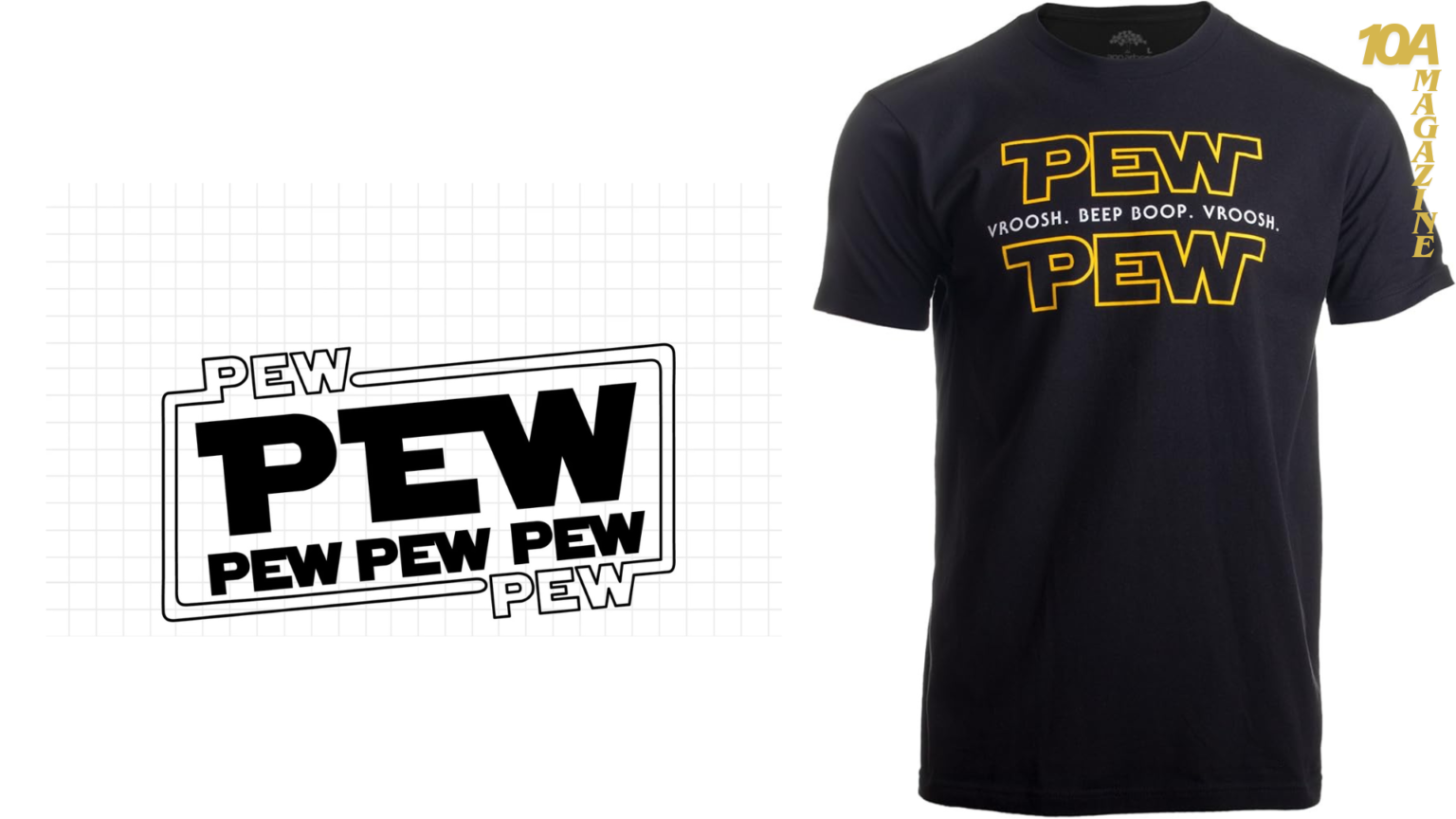
Star Wars fans turned “pew pew” into a badge of honor rather than a throwaway sound effect. The joke became a staple of fan-made merchandise, appearing on t-shirts and phone cases that replace the classic Star Wars title text with the phrase instead.
Cast members embrace the joke too. Mark Hamill regularly shares Star Wars-related content with fans and interacts directly with the community online.
Even actors on set could not resist saying it out loud. Laura Dern admitted she instinctively said “pew pew” while firing a blaster during filming of The Last Jedi, and director Rian Johnson confirmed you can actually see her mouth the words on screen every time her character fires the weapon.
Why the Sound Still Matters Today
Sound design rarely gets credit the way visual effects do, but Star Wars proved sound can define a franchise just as much as any spaceship or lightsaber. The blaster effect gave audiences something they had never heard before, and that unfamiliarity is exactly what made it memorable.
Podcasts and documentaries continue to explore the topic decades later, which shows how much curiosity still surrounds the origin of the sound. Fans want to know the “how” behind the effects they grew up with, and the blaster story delivers a satisfying answer: a hiking accident, a wrench, and a stubborn sound designer who refused to settle for anything electronic.
That refusal to compromise is part of why Star Wars still feels distinct today, even as newer franchises lean heavily on digital effects. The “pew pew” sound remains a reminder that analog creativity, patience, and a bit of luck can outlast almost any technology trend.
Pew Pew Compared to Other Sci-Fi Sound Effects
Star Wars did not invent the idea of laser sound effects, but it changed the standard other franchises followed. Earlier science fiction often used steady electronic tones for weapons, which sounded futuristic but lacked personality. The original Star Trek series took a similar route, giving phasers a smooth, sustained pulse instead of a sharp crack.
Star Wars broke that pattern by using a recorded, physical sound instead of a synthesized one. That single choice gave the blaster effect texture and unpredictability, since no two shots ever sounded perfectly identical. Audiences responded to that realism, even without knowing why it felt different from other space battles on screen.
The result reshaped expectations across the genre. Later films and games often reference the same sharp, percussive style when designing their own weapon effects, whether they credit Star Wars directly or not. Few sound effects in film history carry that kind of lasting influence over an entire genre.
Frequently Asked Questions
What does “pew pew” mean in Star Wars? “Pew pew” describes the sound of a laser blaster firing, most famously the Stormtrooper rifles heard throughout the original Star Wars trilogy.
Who created the Star Wars blaster sound? Sound designer Ben Burtt created the blaster sound. He recorded the tone from a radio tower guy-wire after accidentally discovering the noise on a hiking trip.
Was the blaster sound made electronically? No. George Lucas wanted an organic, recorded sound rather than an electronic one, so Burtt captured the effect using real guy-wires and a wrench.
Why do people say “pew pew” as a meme? The phrase spread through gaming communities and internet slang in the mid-2000s before becoming permanently tied to Star Wars blaster fights in pop culture.
Did any Star Wars actors say “pew pew” during filming? Yes. Laura Dern said “pew pew” out loud while firing a blaster in The Last Jedi, and the moment made it into the final cut of the film.