



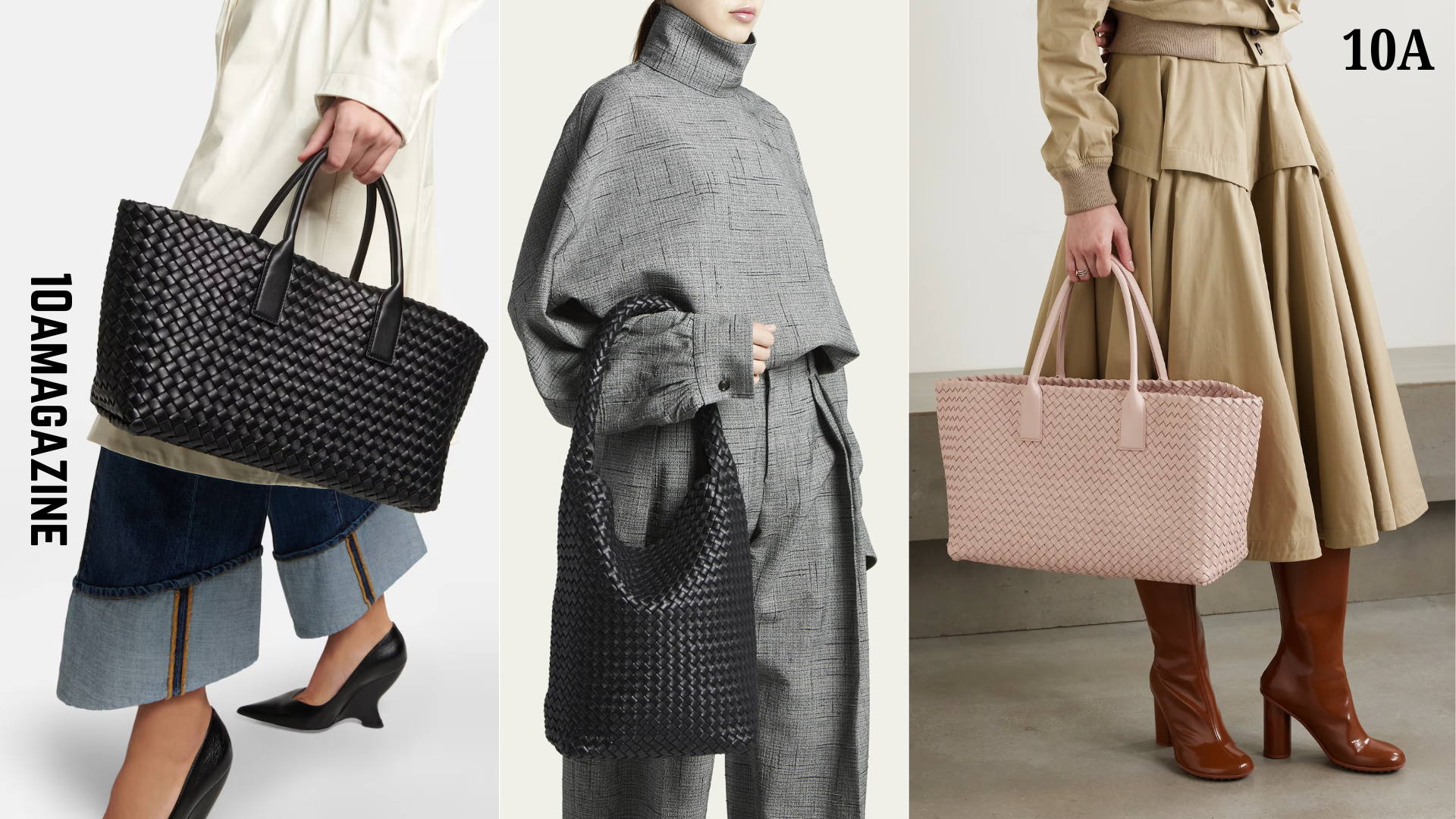
Some bags scream for attention. The Cabat doesn’t. It just sits there perfectly woven, utterly logo-free, and radiating the kind of confidence that only comes from knowing exactly what it is.
That’s the whole philosophy of the Bottega Veneta Cabat. And it’s also why, more than two decades after its debut, people are still obsessed with it.
This is a complete guide to everything you need to know about the Cabat its history, its extraordinary craftsmanship, its sizes, and whether it’s worth the investment in 2025.
What Is the Cabat Bag?
The Cabat is Bottega Veneta’s signature open tote an unlined, rectangular bag entirely hand-woven in the house’s iconic intrecciato leather. There’s no logo on the outside. No hardware flash. No branding screaming at passersby.
According to W Magazine, the Cabat has achieved genuine cult status thanks to its signature woven intrecciato design and enduring appeal among fashion insiders and celebrities alike.
The bag’s philosophy mirrors Bottega Veneta’s famous motto: “When your own initials are enough.” If you know, you know. And people in the know, know the Cabat.
The History of the Cabat: Where It All Began
The Cabat’s story starts in 2001. That year, Tomas Maier then creative director of Bottega Veneta introduced a bag that would quietly revolutionise the luxury market.
As Luxbags notes, the Cabat was the first handbag designed by Maier and the first Bottega bag to carry its own name. It marked a significant milestone in the brand’s history a conscious move away from the rigid, logo-heavy bags dominating fashion at the time.
Who What Wear confirms that the Cabat’s launch in 2001 marked a significant departure from the era’s prevailing trend of rigidly structured bags, opting instead for softer and more contemporary silhouettes. In a world saturated with monograms, the Cabat chose silence and that silence turned out to be its loudest statement.
Bottega Veneta itself was founded in 1966 in Vicenza, Italy, by Michele Taddei and Renzo Zengiaro. As 1stDibs explains, the intrecciato weaving technique developed in the late 1960s gives the brand’s bags their suppleness and strength, and has been the house’s defining symbol ever since.
The Craftsmanship: Why the Cabat Takes Two Days to Make
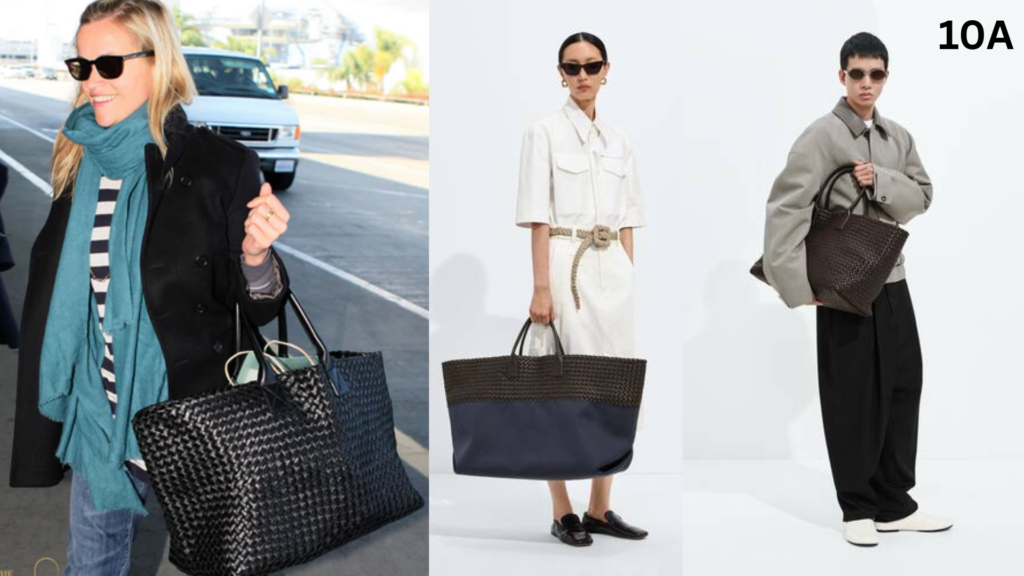
Here’s where things get genuinely impressive. Making a Cabat isn’t a factory process. It’s closer to performance art.
According to PurseBlog, for the original large size, the classic intrecciato Cabat takes two people two full days to seamlessly weave the leather strips into shape. The bag has no inner lining it’s a fully formed structure crafted from woven leather alone, which shows inside and out.
Luxbags explains that the intrecciato weaving process involves interlacing leather strips in a complex pattern that creates a seamless and visually stunning finish. The absence of lining isn’t a shortcut it’s proof of skill. A lining would simply hide the artisan’s work.
According to Endource, it took Bottega Veneta between 10 and 15 prototypes to perfect the Cabat. That level of iteration before launch is rare in any industry and in fashion, it’s almost unheard of.
Tomas Maier also established a dedicated school to train future artisans in the intrecciato technique. Every Cabat produced today comes from hands trained specifically for this purpose. As Luxbags notes, because the production process is so labour-intensive, only a limited number of Cabat bags are made each year. Each one comes with a detachable pouch stamped with a metal plate listing how many Cabats were produced that year and the specific number of that particular bag.
Limited production. Handmade. Numbered. Sound familiar? Yes, the Cabat has a lot in common with a Birkin just without the waiting list drama.
The Intrecciato Weave: More Than Just a Pattern
The intrecciato (literally “interwoven” in Italian) is not simply a design choice. It’s a structural technique.
The Big Bag Blog explains that each Bottega Veneta bag can involve over 100 individual production steps to create the signature weave. Artisans train for years to perfect it. The result is leather that is simultaneously softer, more supple, and more durable than conventionally constructed bags.
The weave also means the bag ages beautifully. Unlike smooth leather that scratches visibly, the intrecciato develops a rich patina over time each mark and fold becoming part of the bag’s character rather than a flaw.
SACLAB describes the Cabat as a true celebration of the intrecciato weave an unlined, open-topped tote that’s as beautiful on the inside as it is outside. That’s a rare claim for any bag to make, let alone deliver on.
Cabat Sizes: Which One Is Right for You?
The Cabat comes in multiple sizes, and choosing the right one genuinely matters. Here’s the breakdown based on real dimensions:
Mini Cabat Compact and structured. Dimensions approximately 26cm x 15cm x 13cm. According to Luxbags, the handle drop on the Mini is around 8cm. This size fits essentials phone, keys, card holder and works brilliantly as an evening bag or polished daytime option.
Medium Cabat The sweet spot for most buyers. PurseBlog reviewed the medium and confirmed dimensions of 9.8 x 15.6 x 6.4 inches. It sits comfortably on the shoulder and holds everything you’d need for a full day out.
Large Cabat Marie Claire confirms the large measures 11.4″ x 15.7″ x 6.3″ genuinely spacious, ideal for work, travel, or anyone who lives by the principle that you can never have too much room in a bag. This is the size that requires two artisans and two full days to weave.
SACLAB notes that currently only medium and large are in active production, with an enormous range of colours and finishes available from classic neutrals to rainbow weaves, transparent finishes, and embellished leathers.
The Cabat as an Investment: Does It Hold Its Value?
This is the question that moves the Cabat from “beautiful bag” into “very smart purchase” territory.
Marie Claire describes the Cabat as one of Bottega Veneta’s priciest styles, with the tight intrecciato weave versions costing around $4,000 to $6,000 at retail. Bragmybag has priced the large at approximately $7,000 USD and €6,500 EUR through Bottega Veneta boutiques depending on season and material.
As The Big Bag Blog explains, many Bottega bags retain strong resale value particularly limited colours, rare finishes, and sought-after mini versions. The Cabat, with its numbered production and handcrafted status, sits comfortably in that category.
Underpriced notes that vintage Cabat totes command strong prices from collectors, and that the real intrecciato ages beautifully with a patina which actually increases desirability on the secondary market rather than diminishing it.
Who What Wear puts it simply: Bottega Veneta bags have captivated fashion insiders and celebrities alike, and the brand has established itself as a symbol of understated elegance that remains deeply relevant in today’s luxury market.
The Cabat in 2025: What’s New?
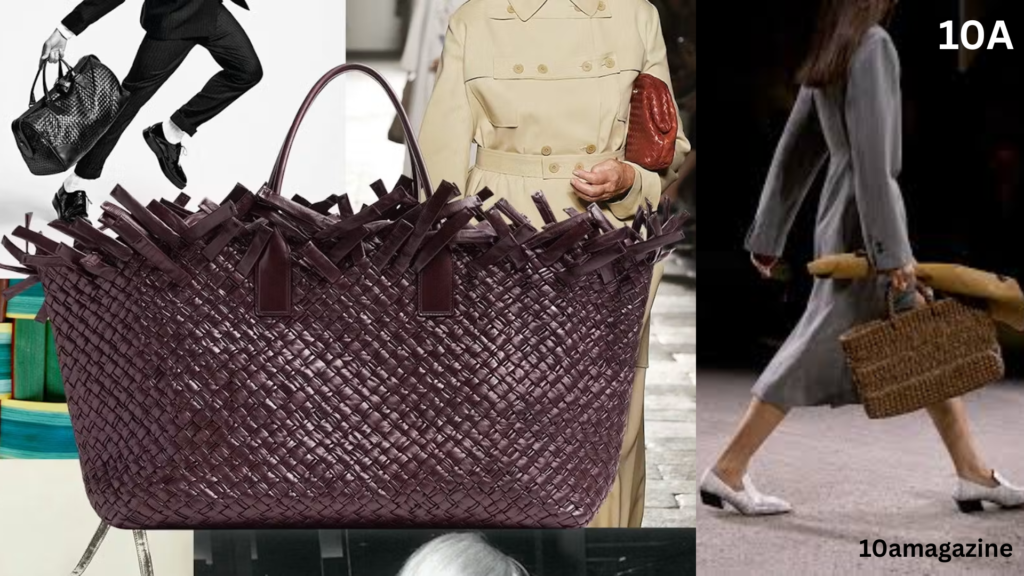
The Cabat is a permanent collection staple, but Bottega Veneta keeps it fresh.
According to W Magazine, the Cabat has been reimagined over the years in various sizes and guises and for 2025, there is a striking new frayed-edge iteration that playfully unravels the intrecciato weaving tradition itself. It’s self-referential in the best possible way.
Marie Claire also reports that Bottega iterated further on the silhouette for Winter 2024, introducing the Cabat in solid calf leather for a slouchier yet still sturdy option offering a softer alternative to the structured intrecciato weave.
The Cabat remains under the creative direction of Matthieu Blazy, who took the helm in 2022 and has upheld the brand’s legacy of extraordinary craftsmanship while adding his own quiet modernism to the collection.
How to Style the Cabat
The Cabat’s versatility is part of what makes it so enduring. It works with almost everything.
For a weekday work outfit, pair the large Cabat with tailored trousers, a silk blouse, and loafers. The bag’s structured-but-soft shape complements clean, minimal dressing without competing with it.
For weekends, the medium Cabat in an earthy tone cognac, walnut, or dark brown works effortlessly with denim, knitwear, and simple white trainers.
For evening, the mini Cabat doubles as a polished compact bag that elevates a simple dress without the fussiness of a clutch.
Spotted Fashion notes that the Cabat comes in a wide range of leathers including Nappa, Vachette, and exotic materials, with seasonal colour drops complementing the classic permanent options like Nero (black) and Ebano (brown). Classic colours give the widest styling flexibility and, as Underpriced confirms, also carry the broadest resale demand.