



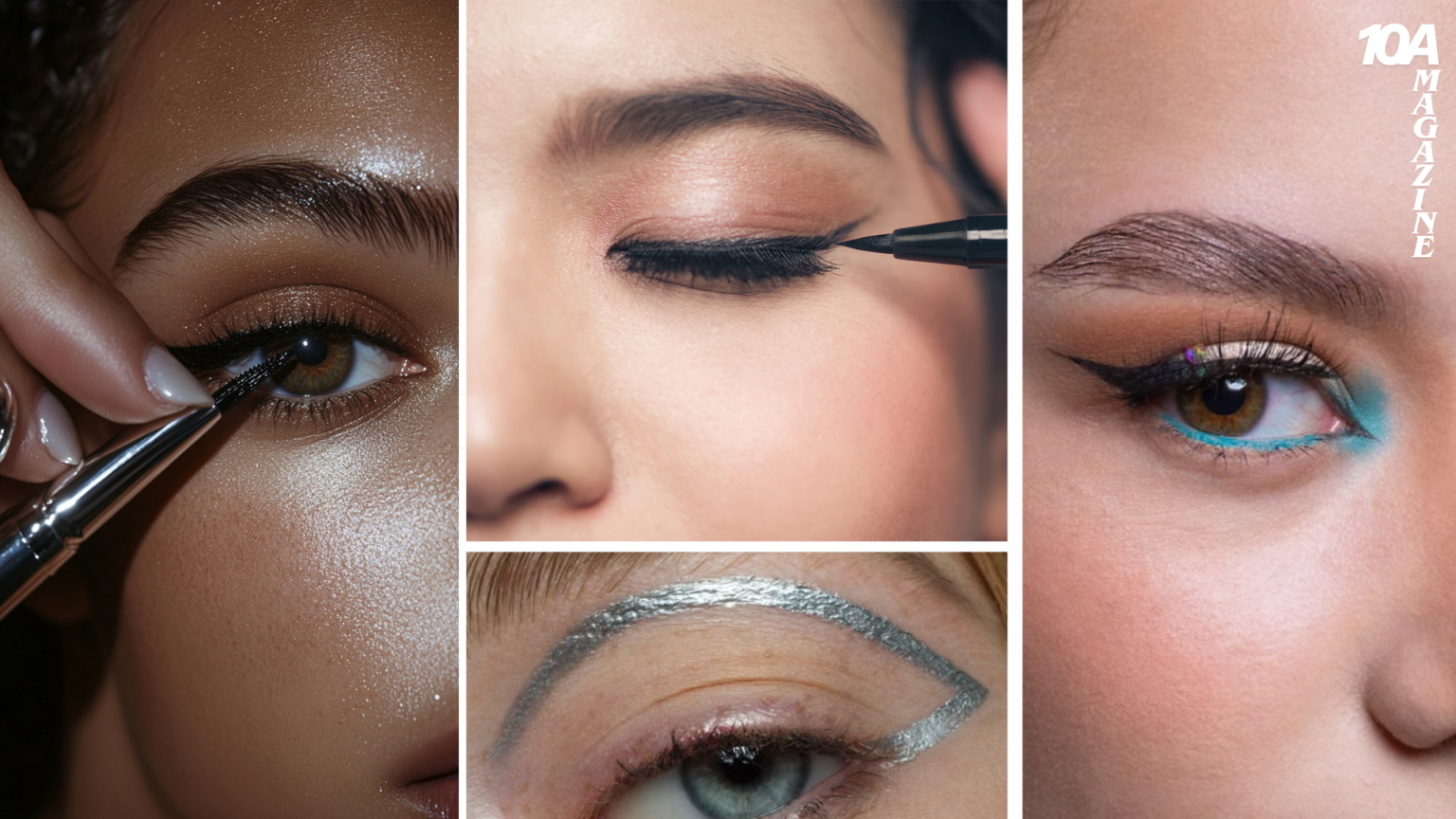
Eyeliner has a funny way of changing an entire face with just one line. It can lift tired eyes, add drama for a night out, or quietly define your look for a regular Tuesday. But if you’ve ever ended up with two very different wings, or a smudge that looks more “raccoon” than “runway,” you’re not alone.
Learning how to apply eyeliner properly isn’t about talent. It’s about technique, the right tools, and a bit of patience. This guide breaks it down step by step, using tips straight from professional makeup artists and beauty experts, so you can go from shaky hands to a clean, confident line.
Why Eyeliner Makes Such a Big Difference
Eyeliner isn’t just decoration. Lining the upper lash line defines the eyes and draws attention to them, while also creating the impression of fuller lashes. That’s really the whole point of eyeliner: it fills in the small gaps between your lashes so your eyes look more awake, more open, and more “finished,” even without any other makeup on.
Choosing the Right Eyeliner Formula
Before you even pick up a liner, it helps to know your options. Each formula behaves differently, and picking one that matches your skill level makes the whole process less stressful.
Pencil eyeliner is usually the easiest place to start. An eyeliner pencil is considered the easiest formula to use, and it works well for an everyday look. If you go this route, keep it sharpened regularly so the line stays clean and precise.
Gel eyeliner comes in a small pot and is applied with a brush. It has a creamy texture that glides across the lid easily, though it can be a bit trickier since you need to pick up the right amount of product.
Liquid eyeliner gives the sharpest, most graphic lines. Liquid eyeliner is best for bold wings and graphic looks, and while it takes more practice, it eventually helps you create clean, precise edges that hold up. If you’re new to liquid formulas, a brush-tip pen style offers the intensity of liquid liner with the control of a marker, which makes it a gentler entry point than a traditional dip liner.
If you’re still building confidence, professional guidance also suggests skipping jet black at first. A soft brown or grey shade is more forgiving of uneven lines and tends to suit a wider range of skin tones and eye colors, so you can practice placement without stressing over precision.
Step-by-Step: How to Apply Eyeliner
1. Prep Your Eyes First
Start with a clean, moisturized lid. Prepping the eyes with moisturizer and a makeup base helps the liner glide on smoothly. If you’re using eyeshadow too, apply that first. Pencil eyeliner should go on after eyeshadow, and mascara should be applied after the eyeliner, since this order helps prevent smudging.
2. Steady Your Hand and Your Lid
Gently hold your lid taut to give yourself a smooth surface to work on. Holding down the lid this way makes it easier to apply the liner close to the lash line. Avoid pulling or stretching the skin too much, since this can distort where the line actually sits once you let go.
3. Work in Small Strokes, Not One Long Line
This is probably the single most useful tip for beginners. Instead of trying to draw one continuous line, work in a series of small strokes across the lash line, almost like connecting the dots. A light hand with short, small strokes, almost like a stamping motion, helps you cover the lash line evenly, and you can always go back to fill in any small gaps afterward.
Another way to build the line is with dots. Placing small dots or dashes close to the upper lash line, then connecting them with short strokes, creates a smooth and even result.
4. Build the Line Gradually
Don’t try to get a thick, bold line on your first pass. Start with thin lines and gradually build up to your desired thickness. You can always thicken the line later, but it’s easier to work from a thin base than to fix a line that’s already too heavy. For a naturally elongated eye shape, keep the line thinnest at the inner corner and let it gradually thicken toward the outer corner.
5. Try Tightlining for a Fuller Lash Look
If you want definition without a visible line, tightlining is worth learning. This technique involves applying eyeliner directly to the upper waterline, filling the space between the lashes to create the illusion of fuller lashes and a more defined eye shape without any visible liner on the lid. It works especially well for everyday, no-makeup-makeup days.
6. Master the Wing (If You Want One)
A winged liner can look intimidating, but it comes down to three simple lines. Draw a line at an upward angle from the outer corner of the eye using your lower lash line as a guide, then fill in the shape more heavily to create a defined triangle. If you want a crisp, symmetrical angle, placing a small sticky note along the outer corner of your eye gives you a straight edge to trace your wing against.
7. Set and Seal Your Look
To help your liner last longer, go over it lightly with an eyeshadow brush in a matching shade once the line is complete. This small step also softens any harsh edges for a more blended finish.
Common Eyeliner Mistakes and Easy Fixes
Mistakes happen to everyone, including professionals. Expecting a few slip-ups and keeping cotton swabs nearby is part of learning the process. A few fixes worth knowing:
- Uneven line: Dip a cotton swab in makeup remover and gently clean up the edge, then use concealer to sharpen the line.
- Smudging throughout the day: Choose a soft, transfer-proof or waterproof formula if your eyes tend to water or your lids get oily.
- Liner not lasting on the waterline: This is normal. Color on the waterline typically doesn’t last as long as it does on the upper lash line, so you may need to reapply during the day.
- Small eyes looking smaller: If you have smaller eyes, lining the entire lash line can make them look even smaller, so try lining just the outer half instead.
Tips for Different Eyeliner Looks
- Natural, everyday look: Keep the line thin and choose a subtle shade like brown, which defines the eye without looking overdone.
- Smoky, smudged look: Soft, blendable formulas like eyeliner pencils work best here, since any small mistakes simply blend into the smoky effect.
- Bold, precise look: Liquid liner is better suited for this, since it’s transfer-proof and holds a clean, defined edge all day.
- Bigger-looking eyes: A touch of white or nude eyeliner on the waterline can make the eyes appear larger and more awake.
Tools That Make Application Easier
You don’t need a huge kit, but a few tools genuinely help. An eyeshadow primer preps the lid and creates a smoother, more even base for whichever liner formula you choose. For gel or powder liners, a thin, flat brush allows more precise placement along the lash line. And if your liner ever needs correcting, letting it dry down first before removing it with a cotton tip and eye makeup remover gives a cleaner fix.
Watch and Learn
If you’re a visual learner, video tutorials can make the small hand movements much easier to follow. This Instagram eyeliner tutorial reel breaks down an easy, beginner-friendly technique step by step. You can also explore the #eyelinertutorial hashtag on Instagram for more real, everyday examples from different creators.
Final Thoughts
Applying eyeliner is a skill, and like any skill, it gets easier with repetition. Applying eyeliner properly comes down to practice, and with enough of it, a steady, polished line becomes completely achievable. Start with a formula that matches your comfort level, work in small strokes, and don’t worry about perfection on the first few tries. The line will get straighter every time you pick up the liner.
Frequently Asked Questions
1. What is the easiest eyeliner for beginners? Pencil eyeliner is generally the easiest to control since it glides on smoothly and is easy to soften with a smudge if the line isn’t perfectly even.
2. Should eyeliner go above or below the lashes? For a natural, fuller-lash effect, liner is applied as close to the base of the lashes as possible, right along the lash line rather than above it.
3. What is tightlining? Tightlining means applying eyeliner directly onto the upper waterline, the thin strip of skin beneath the upper lashes, to create fuller-looking lashes without a visible line.
4. How do I stop my eyeliner from smudging? Using a waterproof or transfer-proof formula, applying it after eyeshadow but before mascara, and letting each layer set before touching your eye all help reduce smudging.
5. What’s the easiest way to get a symmetrical wing? Using a guide, like a small sticky note or tape placed at an angle from the outer corner of the eye, helps keep both wings even.
6. Can eyeliner make small eyes look bigger? Yes. Adding white or nude eyeliner to the waterline, and avoiding lining the entire lower lash line, both h