


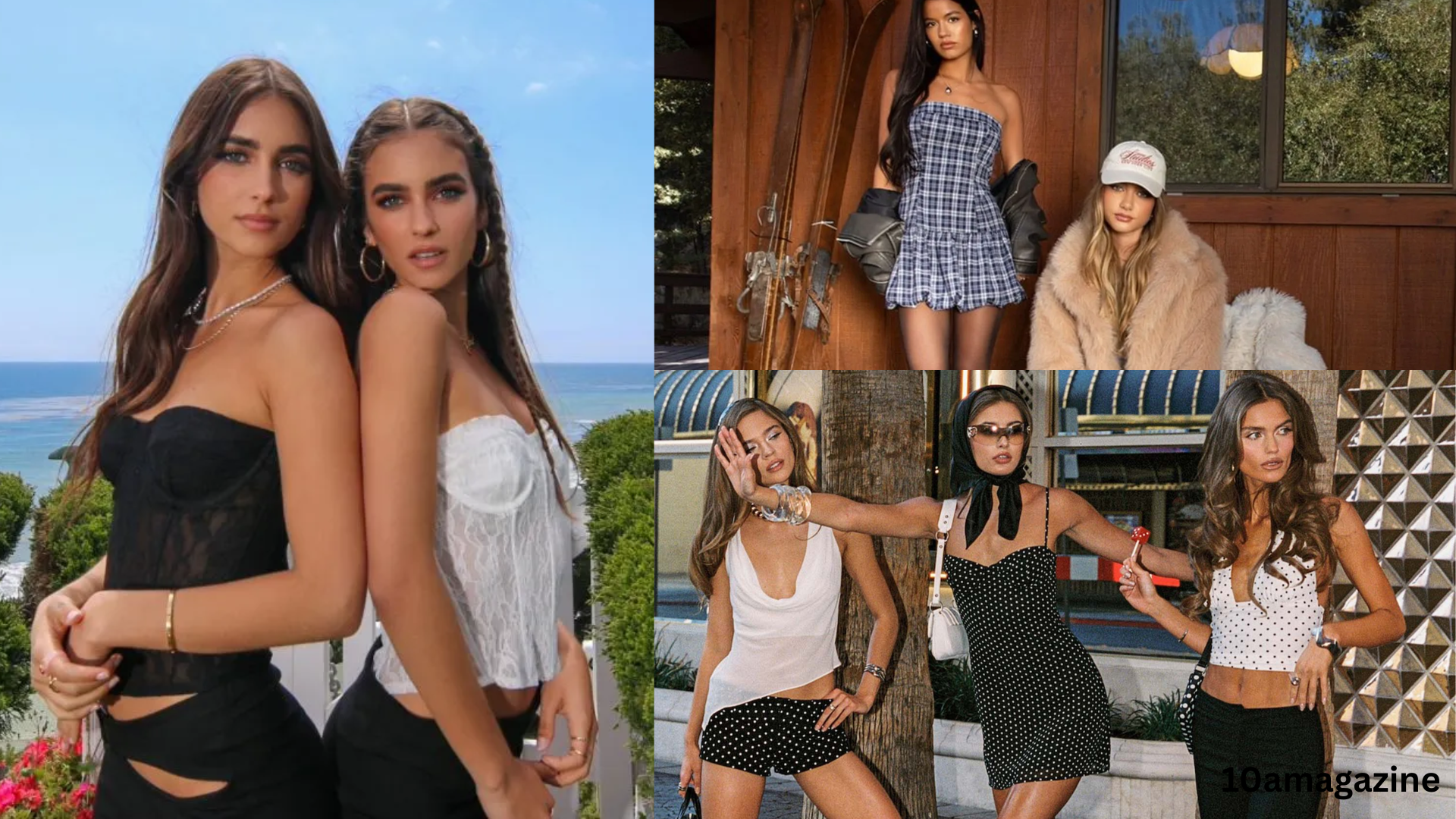
Let’s get straight to the point. You’ve seen Edikted all over your TikTok For You page. You’ve probably clicked “Add to Cart” at least once maybe while telling yourself it was just this one time. But now you’re wondering: is Edikted actually fast fashion? Or is it trying to be something different?
Good question. Let’s find out together.
What Exactly Is Edikted?
Edikted (yes, it’s pronounced “addicted” very on the nose) is a digital-first fashion brand founded in 2020 by Israeli entrepreneurs Dedy Shwartzberg and Zvika Alon. It’s headquartered in Los Angeles and targets Gen Z women looking for trendy, affordable outfits for nights out, festivals, and everything in between.
The brand exploded on TikTok in 2021, riding the viral “TikTok made me buy it” wave. Today, the hashtag #Edikted has racked up over 63,000 posts on TikTok alone. That’s a lot of haul videos.
It started online-only but has since opened physical stores first in New York’s SoHo in 2023, then The Grove in Los Angeles and Mall of America in 2024. In 2025, it’s expanding into five new Simon Property Group malls across the U.S., including King of Prussia and The Galleria in Houston (Glossy).
Their stores even feature a pink heart-shaped archway designed for TikTok selfies. Of course they do.
So, Is Edikted Fast Fashion? The Short Answer
Yes. Edikted is a fast fashion brand.
It checks every box of the fast fashion model: rapid trend turnover, low prices, mass production, and very little transparency about its supply chain or manufacturing practices.
But let’s not stop at “yes.” You deserve the full picture.
Breaking Down Edikted’s Fast Fashion Model
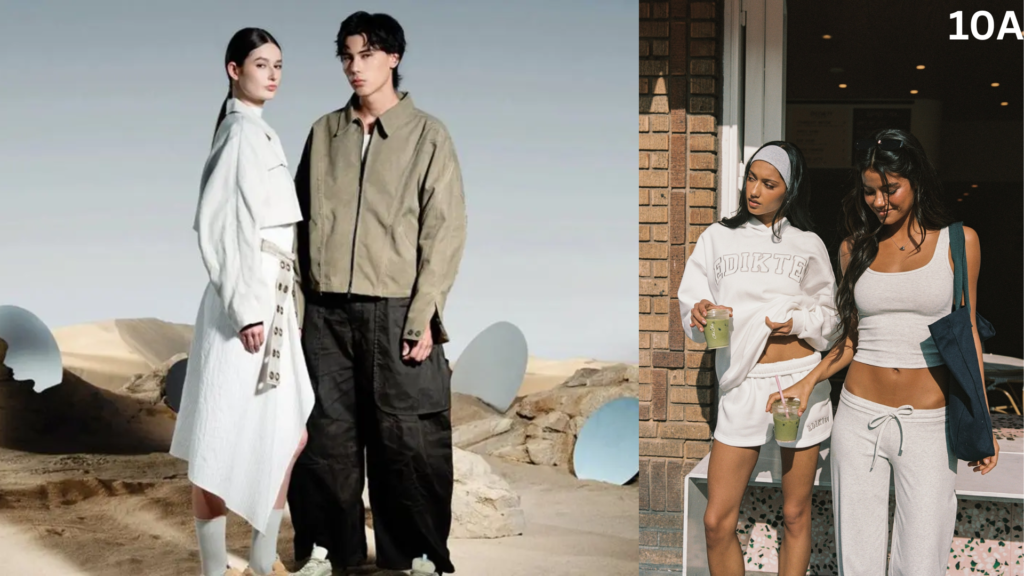
New Collections Every Single Week
Fast fashion is defined partly by speed. How fast does Edikted move? Very.
The brand launched over 50 new drops in 2023 alone averaging nearly one new collection per week (ApartStyle). That’s not a brand trying to slow things down. That’s a brand designed to keep you coming back before last week’s purchase even arrives.
Prices That Raise Questions
You’ll find tops on Edikted for under $10 and dresses in the $25–$40 range. Sounds great for your wallet. But here’s the honest question: how is a dress that cheap to make?
The answer usually involves low-wage labor, synthetic materials, and factories in countries with minimal labor protections. Edikted reportedly manufactures in China, Bangladesh, and Vietnam (ApartStyle).
The Materials They Use
Most of Edikted’s clothing uses polyester, nylon, and elastane all petroleum-based synthetic fabrics. These materials are cheap to produce, but they come with a cost:
- Polyester takes up to 200 years to decompose (Earth.org)
- A single polyester t-shirt generates roughly 5.5 kg of CO2 compared to 2.1 kg for a cotton equivalent
- Synthetic fabrics shed microplastics every time they’re washed microplastics that end up in oceans, soil, and eventually our food
Not exactly a feature they highlight on the product page.
What Does Good On You Say About Edikted?
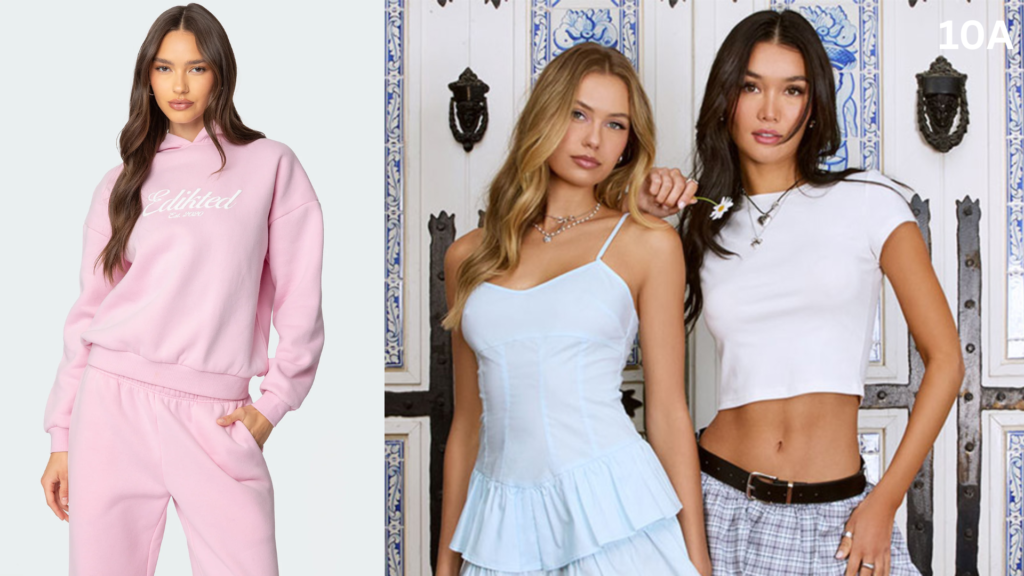
Good On You is one of the most trusted fashion ethics rating platforms globally. Their verdict on Edikted? “We Avoid” — the lowest possible rating.
Here’s their breakdown (Good On You):
- Planet: Very Poor uses few lower-impact materials, follows an unsustainable fast fashion model, no evidence of action on hazardous chemicals or climate impact
- People: Very Poor no Code of Conduct, no verified commitment to worker wages or safety
- Animals: Good appears to avoid animal-derived materials
Two out of three categories rated “Very Poor” is not a good look, regardless of how aesthetically pleasing their Instagram grid is.
What About Edikted’s Sustainability Page?
Edikted does have a sustainability page on its website. It talks about reducing carbon emissions, ensuring ethical employment, and eliminating animal testing (Edikted).
That sounds encouraging. The problem? There are no numbers. No certifications. No third-party audits. No data on what percentage of materials are sustainable or what actual progress has been made.
Vague mission statements are nice to read. They’re just not the same as actual accountability.
Ethically-minded rating site Eco-Stylist put it plainly: Edikted “publishes very little meaningful information about where its clothes are made, how workers are treated, or what steps the brand is taking to reduce environmental harm” (Eco-Stylist).
When a brand’s sustainability section reads more like a vision board than an action plan, that’s worth noting.
Is Edikted Worse Than SHEIN or Zara?
That’s a fair comparison to make. Here’s the honest breakdown:
- SHEIN is widely considered the most extreme example of ultra-fast fashion. It dominates with a ~50% U.S. fast fashion market share (Uniform Market) and releases thousands of styles per day. Edikted is not at that level.
- Zara operates on faster trend cycles than traditional fashion but has made more public commitments to sustainability and has better supply chain transparency.
- Edikted sits somewhere between more curated than SHEIN, less transparent than Zara, and growing fast.
The brand does use what it calls a “try and repeat” model releasing styles in small quantities and scaling based on demand. That’s a slightly smarter inventory approach. But it doesn’t change the fundamental production model or the materials used.
The Fast Fashion Industry: Some Numbers to Put This in Perspective
This isn’t just about Edikted. It’s about a much bigger system.
- The fast fashion industry is now worth $150+ billion and is projected to reach $291 billion by 2032 (Uniform Market)
- Fashion is responsible for roughly 10% of global carbon emissions more than all international flights and maritime shipping combined (Earth.org)
- Clothing is now worn only 7 to 10 times before being discarded a 35% decline in just 15 years
- 5.8 million tons of textiles are thrown away in Europe alone every year (Green Heart Collective)
Gen Z is caught in an interesting contradiction here. A study found that 94% of Gen Z respondents say they support sustainable clothing but a significant portion of them still shop at fast fashion brands regularly (Uniform Market). Edikted’s entire marketing strategy is built around that gap.
We see you, Gen Z. We are not judging. Much.
Worker Welfare: The Part Brands Hope You Skip
There’s no public information about the specific factories where Edikted clothes are produced. That means it’s impossible to verify how workers are treated, whether they’re paid fairly, or what their working conditions look like.
Edikted has not made any public commitment to paying workers a living wage. There is no Code of Conduct, no third-party labor audits, and no certifications from recognized bodies like Fair Trade or B Corp (ApartStyle).
For context, the U.S. Department of Labor has documented cases of garment workers being paid as little as $1.58 per hour in states where the minimum wage was $15 (Uniform Market). The fashion industry at large has a well-documented problem with labor exploitation, and brands with no transparency offer no assurance that they’re an exception.
What Are Shoppers Actually Saying About Quality?
The general consensus from real customer reviews: Edikted clothes look great in photos and on first wear. After that? Results vary and not always in a good direction.
Common themes include pieces losing shape after a few washes, fabric pilling, and items not holding up as expected (EverdayGlow). That’s the trade-off with fast fashion pricing. You’re not buying a wardrobe staple. You’re buying something designed to look good for a season or a social media post.
That’s not a crime. But it’s worth knowing before you click “buy.”
Should You Shop at Edikted?
That’s genuinely a personal decision. Here are some honest thoughts:
If you shop at Edikted:
- Be intentional. Buy pieces you’ll actually wear multiple times.
- Avoid impulse buying just because something’s trending this week.
- Consider buying second-hand Edikted pieces through ThredUp or Depop to reduce demand for new production.