


The Complete Guide to the Leaning Tower and the City That Built It
Say “Pisa Italy” to anyone, anywhere, and their brain does the same thing. It tilts. Literally. Most people picture one tower, one lean, and a million tourists pretending to push it back up. That mental image isn’t wrong. But it is incomplete.
Pisa is a real city, with a real river, a serious university, and a cathedral square that UNESCO didn’t add to its World Heritage list just because a bell tower forgot how to stand straight. This guide breaks down what actually makes Pisa worth your time, backed by real history, not travel-blog folklore.
Where Is Pisa, Italy?
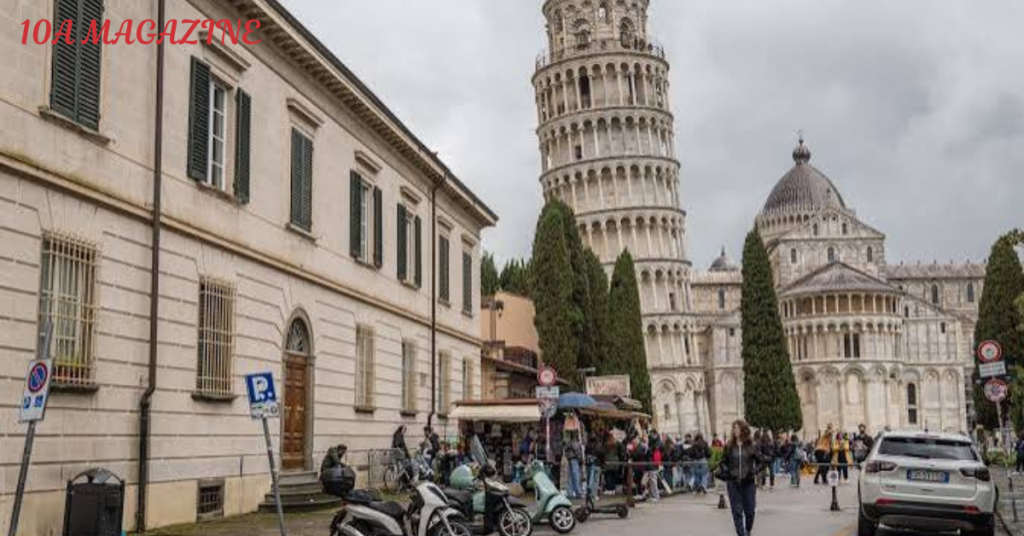
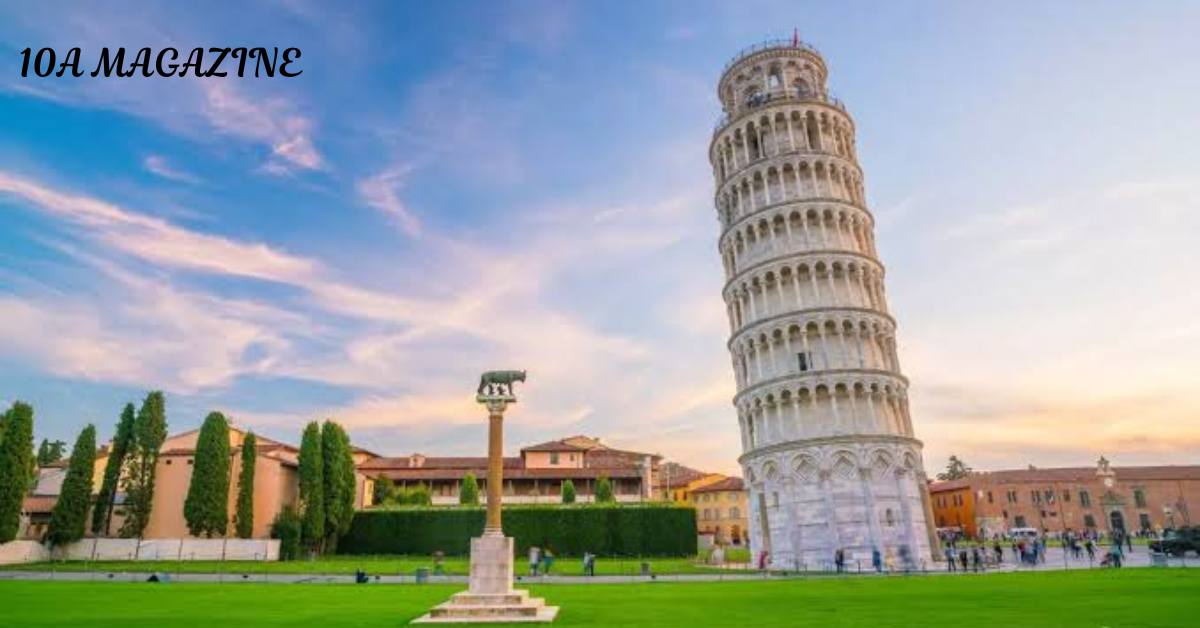
Pisa sits in Tuscany, in west-central Italy, right on the banks of the Arno River. <cite index=”2-2″>The Leaning Tower stands on the grounds of the city’s cathedral complex, known as the Campo dei Miracoli or Piazza dei Miracoli — the “Square of Miracles.”</cite>
It’s close to Florence (about an hour by train) and just a short drive from the coast. So most visitors treat Pisa as a half-day stop. Honestly, that’s a bit of a shame, because the city earns more than a photo-op and a gelato break.
A Quick History of the Leaning Tower
The tower wasn’t built to lean. It was built to ring bells.
<cite index=”2-2″>Construction began in 1173 as the third and final structure of Pisa’s cathedral complex, designed to serve as the complex’s bell tower.</cite> <cite index=”5-1″>The architect behind the design was Bonanno Pisano, working in the Romanesque style.</cite>
Here’s where it gets interesting. Pisa didn’t rush this project — mostly because it couldn’t.
<cite index=”2-2,2-3″>Only three of the planned eight stories were finished before war broke out between Italian city-states, halting construction for almost a century.</cite> That delay, ironically, may have saved the tower. Engineers today believe the century-long pause let the soil compress gradually, which is likely the only reason the structure didn’t collapse outright.
<cite index=”5-1″>Work resumed in 1272 under Giovanni di Simone, and after further interruptions, Tommaso di Andrea Pisano finally completed the belfry in 1370, with the bells installed shortly after.</cite> So the “quick landmark trip” you’re planning today took roughly two centuries to build. Rome wasn’t built in a day. Neither was Pisa’s most famous mistake.
Why Does the Tower Lean?
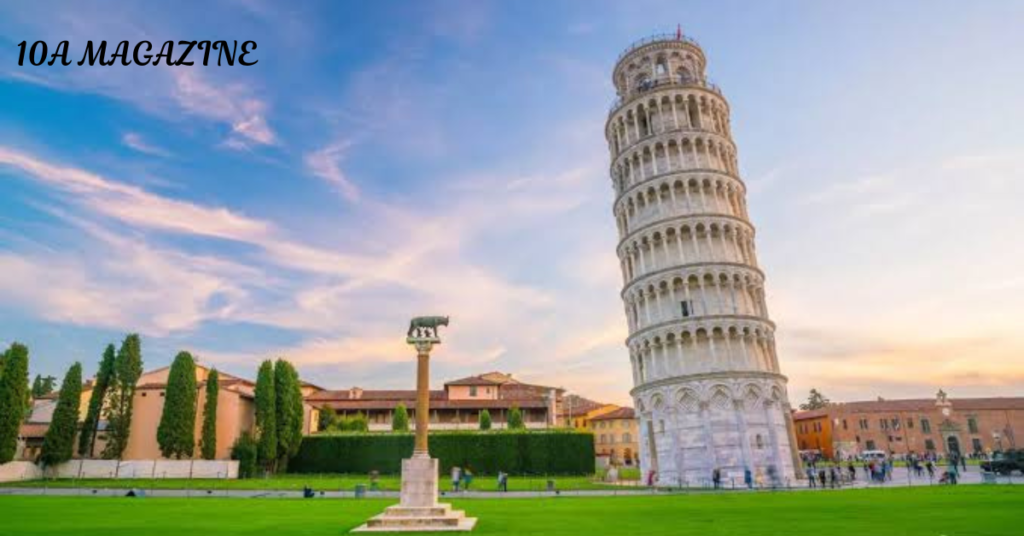
Blame the ground, not the architects.
<cite index=”3-1″>The soil beneath the tower is sandy and unstable, and the foundation built to sit on it simply wasn’t strong enough to handle the weight above.</cite> <cite index=”5-2″>By 1178, while builders were working on the third floor, the tower had already started tilting to 0.2 degrees.</cite>
Engineers tried to fix it more than once, and more than once, they made it worse. <cite index=”8-4″>When construction resumed on the third story, builders attempted to correct the tilt by building straight upward, but this shifted the center of gravity and caused the tower to lean in a slightly different direction instead.</cite>
By the 19th century, one “restoration” attempt actually accelerated the problem. <cite index=”6-2″>Architect Alessandro Gherardesca removed the muddy soil around the base in 1835 and replaced it with a marble foundation, which triggered a new tilt that reached 5.1 metres of deviation by 1918.</cite>
Basically, for 800 years, everyone’s plan to save the tower slightly doomed it further. It’s the architectural version of stepping on a rake, repeatedly, on purpose.
The Modern Rescue (1990–2001)
By the late 20th century, this stopped being charming and started being dangerous.
<cite index=”5-3″>The tilt reached a peak of 5.5 degrees in 1993, and the tower was closed to the public from January 1990 until June 2001.</cite> During that closure, engineers carried out one of the most delicate structural rescue jobs in modern engineering history.
<cite index=”2-1″>Teams siphoned soil from underneath the foundations, which decreased the lean by 44 centimetres, bringing it to about 4.1 metres from perpendicular.</cite> The result: <cite index=”5-3″>the tilt dropped to 3.9 degrees by 2001, following the restoration work.</cite>
Then, in 2008, came the update everyone had been waiting nearly a millennium for. <cite index=”1-1″>Engineers announced that the tower had stabilized to the point that it had stopped moving, for the first time in its recorded history, and estimated it would remain stable for at least 200 more years.</cite>
So yes — after 800 years of leaning, arguing, sinking, and nearly toppling, the tower is finally, officially, boringly stable. Somewhere, a 12th-century Pisan mason is furious he didn’t live to see it.
Pisa Fact File
Quick numbers for the curious (and for anyone settling a pub quiz argument):
- Construction started: 1173, and <cite index=”9-2″>the project wasn’t fully completed until the mid-1300s</cite>
- Height: <cite index=”4-1″>approximately 56.67 metres on the high side and 55.86 metres on the low side</cite>
- Steps to the top: <cite index=”2-3″>294 steps lead from the ground to the bell chamber</cite>
- Weight: <cite index=”4-1″>around 14,500 tonnes</cite>
- Current tilt: <cite index=”5-3″>roughly 3.9 degrees</cite>
- Bells: <cite index=”6-1″>the tower holds seven bells</cite>
- Earthquake survival: <cite index=”1-2″>the tower has withstood at least four strong earthquakes since 1280</cite>, and engineers found this is partly because the soft soil and the tower’s height create a soil-structure interaction that keeps it from resonating with tremors
That last point deserves a moment. The same unstable soil that nearly wrecked the tower for centuries may be part of what kept it standing through earthquakes. Nature has a strange sense of humour.
Piazza dei Miracoli: More Than One Tower
Pisa’s cathedral square holds more than the leaning bell tower, and skipping the rest would be like visiting a buffet and eating only the breadsticks.
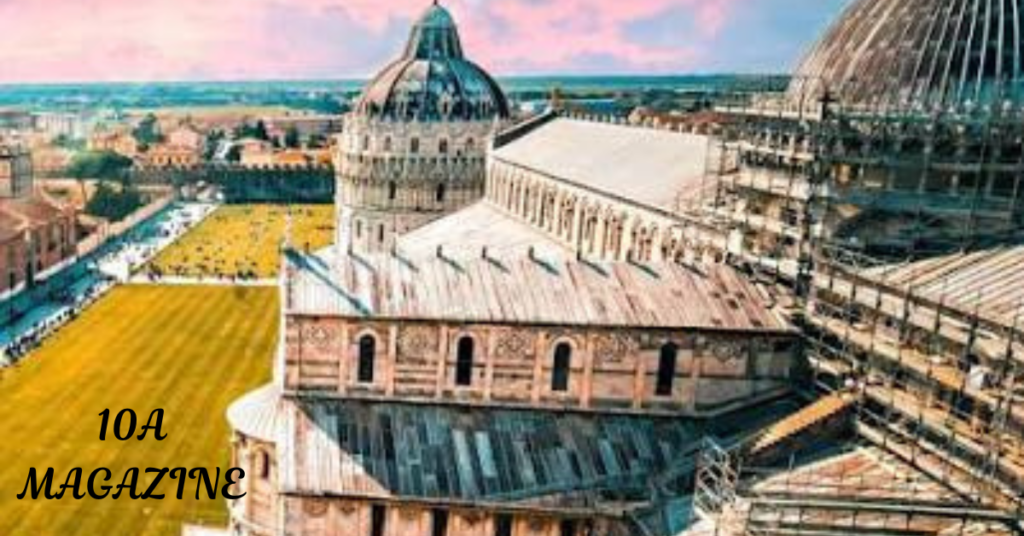
The Pisa Cathedral (Duomo) stands right next to the tower. <cite index=”7-1″>It reaches about 77 metres in height, making it over 20 metres taller than the bell tower beside it</cite> — a detail most visitors never notice, because everyone’s eyes go straight to the tilt.
The square also holds the Baptistery, the Camposanto Monumentale (the historic cemetery), and museums covering the site’s construction history. Together, the whole complex is why UNESCO lists it as a World Heritage site — not just the tower alone.
Fun Fact: Pisa’s Other Leaning Buildings
Here’s something most day-trippers never find out: Pisa has more than one lopsided landmark.
<cite index=”10-2″>The 12th-century church of San Nicola, located near the Leaning Tower, has its own mild lean, and the 11th-century structure of San Michele degli Scalzi carries a tilt of about five degrees</cite> — steeper than the main attraction itself. Pisa’s soil, it seems, never met a foundation it didn’t want to argue with.
Galileo’s Tower Connection
<cite index=”10-3″>Galileo Galilei reportedly used the tower for gravity experiments, dropping two cannonballs of different masses from the top to test how quickly they fell.</cite> Whether the story is complete legend or partially true, it’s stuck around for centuries, and it’s part of why physics students still associate Pisa with more than architecture gone sideways.
When to Visit and How to Get There
Pisa is walkable, well-connected, and doesn’t demand much logistics.
<cite index=”3-2″>The historic centre is easy to reach on foot, and buses E3 and Linea 21 stop near the tower, while bus E25 stops on the other side of Piazza del Duomo. Drivers will find parking available nearby as well.</cite>
<cite index=”6-3″>Opening hours shift seasonally — for example, the tower is typically open from around 8:00 am to 8:00 pm during peak summer months, and shorter in winter</cite>, so check current hours before planning your visit, since these do change year to year.
One tip locals will repeat until you’re tired of hearing it: <cite index=”3-2″>book Leaning Tower tickets in advance, since it remains the city’s single most popular attraction</cite>, and walk-up availability can disappear fast in high season.
Final Thoughts
Pisa built a tower that couldn’t stand up straight, spent 800 years trying to fix that, and ended up with one of the most photographed buildings on the planet. There’s something oddly comforting in that. Not every masterpiece needs to be perfect. Sometimes the flaw becomes the whole point.
If you’re heading to Tuscany, give Pisa more than the classic “holding up the tower” photo. Walk the square, look up at the cathedral, and remember you’re standing somewhere that turned a construction failure into a global icon.