



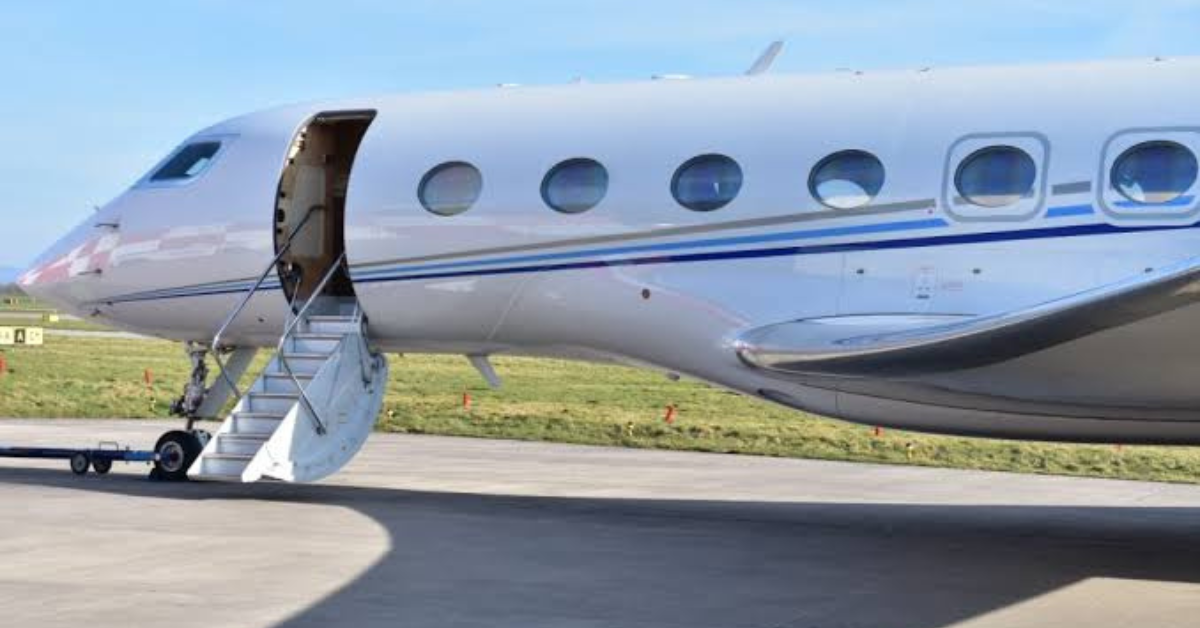
Some machines exist just to get you from A to B. And then there is the Gulfstream G650.
This is not your average private jet. It is the kind of aircraft that makes a billionaire feel like they made the right life choices. Since its first customer delivery in December 2012, the G650 has become the gold standard in private aviation — fast, long-range, impossibly comfortable, and owned by some of the most recognizable names on the planet.
This guide covers everything you need to know about the G650: its performance, cabin, ownership costs, famous owners, and where it stands today. All data comes from verified aviation sources — no fluff, no guesswork.
What Is the Gulfstream G650?

The Gulfstream G650 is an ultra-long-range, large-cabin business jet built by Gulfstream Aerospace, a subsidiary of General Dynamics based in Savannah, Georgia.
Gulfstream launched the G650 program internally in May 2005 and unveiled the aircraft publicly on March 13, 2008. The FAA certified it in September 2012, and the first customer took delivery in December 2012. (Source: Wikipedia)
The aircraft is officially designated as Gulfstream GVI in its FAA type certificate. It carries between 11 and 18 passengers and was the largest and fastest business jet Gulfstream had ever produced at its debut.
Production of the G650 ended in February 2025, with the final aircraft completed after over a decade in service. It has since been replaced by the Gulfstream G800. More than 500 G650 aircraft were delivered during its production run. (Source: Quantum Jets)
Gulfstream G650 Performance Specs
Let’s get into the numbers — because with the G650, the numbers are genuinely impressive.
Speed
The G650 cruises comfortably at Mach 0.85 to Mach 0.90, which translates to roughly 560–595 mph. Its maximum speed hits Mach 0.925, or about 710 mph. To put that in perspective, most commercial airliners cruise around Mach 0.85 — and those carry 200+ passengers with nowhere near the cabin comfort.
The average private jet cruises between 515 and 621 mph. The G650 sits at the very top of that range. (Source: SlashGear)
Range
The standard G650 has a range of 7,000 nautical miles (about 8,055 miles). That means non-stop routes like New York to Dubai, London to Singapore, or Los Angeles to Tokyo are very much possible.
The extended-range variant, the G650ER, stretches that to 7,500 nautical miles thanks to an additional 4,000 lbs of fuel capacity. In 2019, a G650ER set a record by flying 8,379 nautical miles non-stop from Singapore to Tucson — the longest non-stop flight ever recorded for a purpose-built business jet at that time. (Source: Wikipedia)
Altitude
The G650 has a maximum service ceiling of 51,000 feet, well above commercial airline traffic, which typically cruises between 35,000 and 40,000 feet. Flying higher means less turbulence, cleaner air, and smoother rides.
Engines
Power comes from two Rolls-Royce BR725 A1-12 turbofan engines, each producing about 16,900 lbf (75.6 kN) of thrust. These are the same engines used across both the G650 and G650ER variants. (Source: Flexjet)
The G650 also features a three-axis fly-by-wire flight control system, dual auto-throttle, and a Predictive Landing Performance System — all of which help pilots operate the aircraft safely across a wide range of conditions.
Quick Specs Table
| Specification | Detail |
|---|---|
| Max Speed | Mach 0.925 (~710 mph) |
| Cruise Speed | Mach 0.85–0.90 (~595 mph) |
| Max Range (G650) | 7,000 nm (8,055 miles) |
| Max Range (G650ER) | 7,500 nm (8,630 miles) |
| Service Ceiling | 51,000 ft |
| Engines | 2x Rolls-Royce BR725 (16,900 lbf each) |
| Max Takeoff Weight | 103,600 lbs |
| Speed Records | 125+ world records |
Inside the Cabin: Where the Real Magic Happens
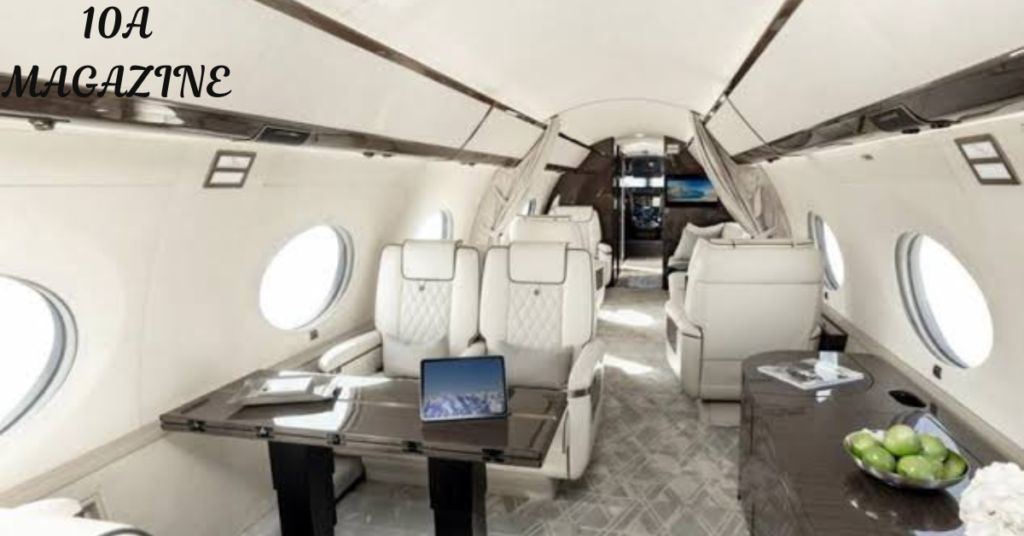
Performance gets you there. The cabin is why you chose this jet in the first place.
The G650 cabin measures 47 feet long, 8 feet 6 inches wide, and 6 feet 3 inches tall — enough to stand up, walk around, and genuinely forget you’re in an aircraft. (Source: Quantum Jets)
The cabin can be configured into up to four living areas, and it typically accommodates 11 to 18 passengers depending on layout. Seats convert to beds, making those 12-hour transoceanic flights a lot more civilized than coach class will ever be.
Sixteen large panoramic oval windows flood the interior with natural light. The oval fuselage design — an intentional departure from the traditional circular cross-section — provides more usable floor space and better headroom. It sounds like a small detail. Once you’re inside, it makes a big difference. (Source: Wikipedia)
At 45,000 feet, the cabin altitude pressure feels equivalent to just 4,030 feet above sea level. For comparison, the FAA allows commercial cabins to be pressurized to the equivalent of 8,000 feet. The G650 essentially halves that, which means less fatigue, fewer headaches, and arriving at your destination feeling like a human being rather than a dehydrated pretzel. (Source: Private Jet Card Comparisons)
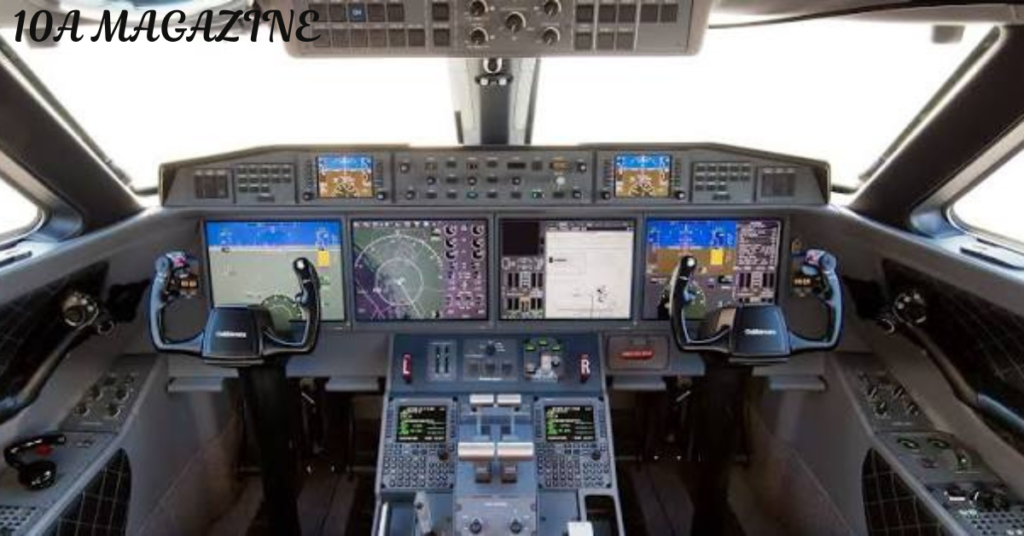
The PlaneView II integrated flight deck, powered by Honeywell Primus Epic avionics, gives pilots advanced synthetic vision and enhanced situational awareness. Passengers control lighting, temperature, and entertainment through the Gulfstream Cabin Experience app. Wi-Fi is standard. So is a full galley kitchen. (Source: GlobalAir)
World Records: Over 125 and Counting
The G650 and G650ER have set more than 125 world speed records combined — a number that would be impressive for a military aircraft, let alone a civilian business jet. (Source: Paramount Business Jets)
One memorable record: a G650ER completed a Singapore-to-San Francisco flight in just 13 hours and 37 minutes. The same route on a non-stop United Airlines commercial flight takes approximately 15 hours and 5 minutes. (Source: SlashGear)
In 2024, Gulfstream Aerospace announced that the G650 and G650ER fleet collectively surpassed 1 million flight hours. That is not just a milestone — it is a statement about reliability.
Who Owns a Gulfstream G650?
This is where things get interesting. The G650 had a three-year waiting list when it first went on sale. That kind of demand does not happen by accident. (Source: Simple Flying)
Here is a verified list of notable G650 owners, drawn from FAA records, aviation tracking databases, and credible media reporting:
Tech Billionaires
- Elon Musk — one of the most documented private jet users globally, with a 19-seat G650 configuration
- Bill Gates — confirmed to own two G650ER aircraft (Source: SuperYachtFan)
- Mark Zuckerberg — G650ER registered under Wyoming-based trust, tail number N68885 (Source: SlashGear)
Business Leaders & Investors
- Larry Ellison, Oracle co-founder
- Laurene Powell Jobs, Steve Jobs’ widow (Source: JetPartners)
- Robert Kraft, Chairman of the Kraft Group (registration N616KG)
- Ralph Lauren, fashion designer (registration N711RL) (Source: SuperYachtFan)
Celebrities & Athletes
- Cristiano Ronaldo — acquired a G650 spotted in Lisbon in June 2025, customized with CR7 branding (Source: SlashGear)
- Michael Jordan
- Oprah Winfrey
- Kim Kardashian — purchased a G650ER for $95 million and customized it further (Source: Simple Flying)
- David Geffen, DreamWorks co-founder (registration N221DG)
- Floyd Mayweather
- Steven Spielberg
The G650 is not just popular — it is the most tracked celebrity jet in private aviation data. That says everything.
How Much Does a Gulfstream G650 Cost?
Owning a G650 is not for the faint of wallet. Here is a realistic cost breakdown.
Purchase Price
- New G650 (at time of production): approximately $68–78 million
- Pre-owned G650: average around $33–46 million depending on age and hours
- G650ER factory list price (Q2 2025): $70.5 million (Source: GlobalAir)
Charter Costs If buying is out of reach, chartering a G650 typically runs around $13,000 per hour. (Source: Paramount Business Jets)
Annual Operating Costs Based on 450 flight hours per year, total annual costs run approximately $4.5–5.2 million all-in — covering fuel, crew, maintenance, insurance, and hangar fees. The direct operating cost runs about $4,844 per flight hour. (Source: Aircraft Cost Calculator)
Yes, it is expensive. But for someone routing between New York, London, and Dubai on a weekly basis, the math on time saved starts to make sense fairly quickly.
G650 vs G650ER: What’s the Difference?
Gulfstream announced the G650ER (Extended Range) in May 2014 at the European Business Aviation Association exhibition.
The G650ER carries an additional 4,000 lbs of fuel, giving it a 500 nautical mile range advantage over the standard G650 — pushing its maximum range to 7,500 nm at Mach 0.85. The ER upgrade can even be retrofitted to existing G650 aircraft in about two weeks at a cost of approximately $2 million. (Source: Wikipedia)
Everything else — engines, cabin dimensions, avionics — stays the same. If your routes regularly push past 7,000 nm, the ER version is worth every penny of the premium.
The G650’s Legacy and Successor
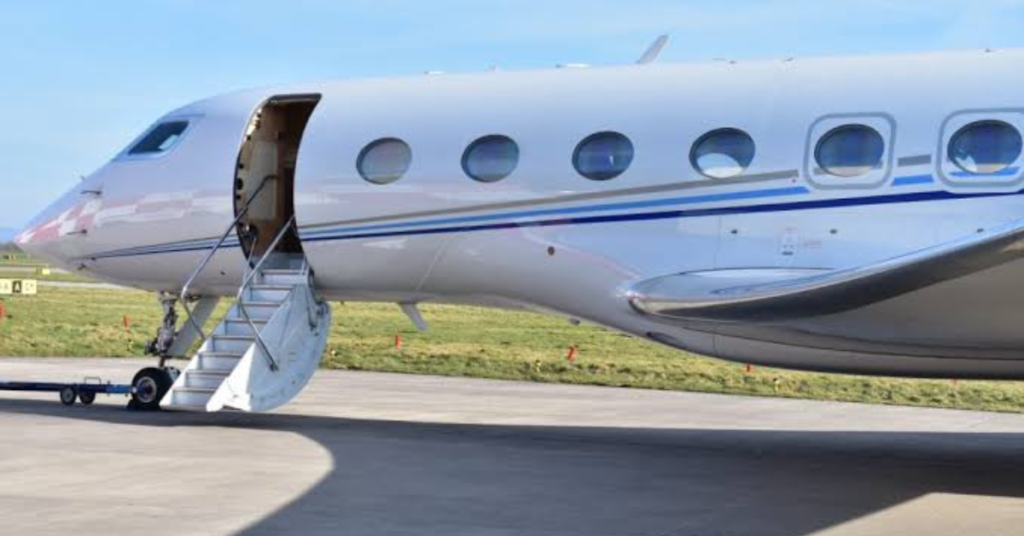
Production of the Gulfstream G650 officially ended in February 2025. Over its 12-year production run, more than 500 aircraft were delivered worldwide — 500th delivery was made at Gulfstream’s Appleton completions facility in September 2022.
Its successor, the Gulfstream G800, received FAA and EASA certification in April 2025 and began customer deliveries in late August 2025. The G800 pushes range further to 8,200 nautical miles and reaches a top speed of Mach 0.935 — slightly faster than even the G650. (Source: Wikipedia)
The G650 is not obsolete, though. With over 339 active aircraft flying globally as of late 2024, a strong pre-owned market, and a support network that will remain active for decades, the G650 continues to be one of the most trusted business jets in the air. (Source: Quantum Jets)
Is the Gulfstream G650 Worth It?
For anyone who travels internationally at high frequency and values time above almost everything else, the G650 makes a compelling case.
It flies faster than most private jets. It goes farther than almost all of them. The cabin is genuinely world-class. It can land at smaller general aviation airports, letting passengers skip the chaos of major international hubs. And its safety record — backed by a fly-by-wire flight control system, quadruple-redundant computers, and over a million collective flight hours — is excellent.
If you can charter it and try it once, it is hard to fly commercial again afterward. That is not a marketing line — that is consistently what passengers report.
Frequently Asked Questions
How fast does the Gulfstream G650 fly? The G650 has a cruise speed of Mach 0.85 to 0.90, with a maximum speed of Mach 0.925 — approximately 710 mph.
What is the range of the Gulfstream G650? The standard G650 flies up to 7,000 nautical miles. The G650ER extends that to 7,500 nautical miles.
How many passengers can a G650 carry? The G650 is typically configured for 11 to 18 passengers, with a maximum of 19 in some configurations.
What does a Gulfstream G650 cost? A new G650 was priced around $68–78 million. Pre-owned aircraft average between $33–46 million. Charter costs approximately $13,000 per hour.
Is the G650 still in production? No. Production ended in February 2025. The G650 has been replaced by the Gulfstream G800.
Final Thoughts
The Gulfstream G650 is not just a private jet. It is a benchmark. It set the standard for what ultra-long-range business aviation should look like, and even now — with the G700 and G800 on the market — it remains one of the most respected aircraft in business aviation history.
Over 125 world speed records. More than a million flight hours. Owners that include Elon Musk, Bill Gates, Cristiano Ronaldo, and Oprah Winfrey. A cabin that makes flying feel like an extension of your living room.
If private aviation has a hall of fame, the G650 deserves a permanent spot near the entrance.
Sources & References:
- Wikipedia – Gulfstream G650/G700/G800
- Quantum Jets – G650 Specs & Performance Guide
- Flexjet – Gulfstream G650 Fleet
- GlobalAir – G650 Specifications
- Aircraft Cost Calculator – G650 Operating Costs
- Paramount Business Jets – G650 Features & Costs
- Simple Flying – G650 Celebrity Owners
- SlashGear – G650ER Everything to Know
- Private Jet Card Comparisons – G650
- Gulfstream Aerospace (Official)