


Fashion Has Always Had a Latin Heartbeat
Let’s be honest. Fashion loves to talk about Paris, Milan, and New York. It talks about European heritage like it invented the needle and thread. But here’s what it doesn’t say loud enough — Latin America and the Latinx community have been shaping global fashion for decades. Quietly. Powerfully. Without always getting the credit.
Latinx designers in fashion are not just participating in the industry. They’re leading it, reshaping it, and honestly, making it a lot more interesting. From the grandeur of Oscar de la Renta’s gowns to the raw Chicano energy of Willy Chavarria’s runway shows, the range is stunning.
The Pioneers Who Built the Foundation
Before we talk about the new wave, we have to respect the architects.
Latinx designers have had profound and lasting influences on fashion over the years. Names like Oscar de la Renta, Carolina Herrera, Narciso Rodriguez, and Maria Cornejo didn’t just succeed — they paved a road so others could walk it.
Oscar de la Renta
The Dominican-born designer became synonymous with American luxury. He dressed first ladies, celebrities, and socialites for decades. His impact on high fashion is basically non-negotiable at this point.
Carolina Herrera
Venezuelan by birth, global by reach. Herrera’s clean lines and sharp tailoring made her a household name in luxury womenswear. She proved that elegance doesn’t need to shout to be heard.
Narciso Rodriguez
Cuban-American and understated, Rodriguez changed how the fashion world thinks about minimalism. His biographic arc — from a working-class Cuban family in New Jersey to dressing global icons — is the kind of story fashion schools should teach.
Maria Cornejo (Zero + Maria Cornejo)
Chilean-British and fiercely sustainable before it was trendy. Cornejo told WWD it best: “Before there was just the usuals, Oscar de la Renta, Carolina and of course Narciso — but now there seems to be a whole new wave of designers coming out of Latin America.” She’s right. And she’s part of why.
These pioneers didn’t just open doors. They kicked them clean off the hinges.
The New Wave: Latinx Designers Fashion Is Having Its Moment
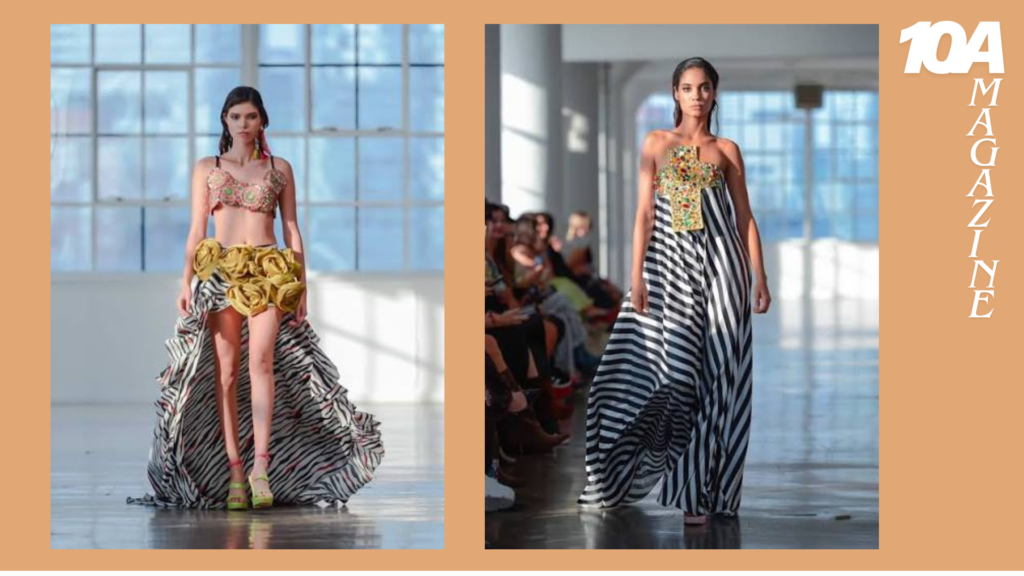
The Museum at FIT (Fashion Institute of Technology) in New York City made it official. From May to November 2023, it hosted ¡Moda Hoy! Latin American and Latinx Fashion Design Today — a landmark exhibition covering over sixty objects from designers across Latin America and the diaspora. Topics ranged from Indigenous heritage and sustainability to gender and politics. That’s not a niche exhibit. That’s a statement.
Noted that the exhibition sought to challenge stereotypes about fashion by designers of Latin American heritage, deliberately moving away from the idea of a single “Latin American style.”
Good. Because there isn’t one. There are dozens.
Willy Chavarria: When Fashion Becomes a Manifesto
If you want to understand what Latinx designers fashion looks like in 2025, start with Willy Chavarria.
When you walk into a Willy Chavarria show, you’re not just seeing clothes — you’re witnessing a manifesto.”
Here’s who he is. Chavarria was born and raised in Fresno, California. His parents — a Mexican father and an Irish-descent mother — faced real racial discrimination in segregated California. He grew up in a farmworker community, surrounded by Chicano culture. He didn’t erase that background to fit into fashion. He made it the entire point.
Reports that Chavarria launched his namesake brand in 2015 and won the prestigious 2023 American Menswear Designer of the Year award — and then won it again in 2024 at the CFDA Fashion Awards. Back-to-back. Let that sink in.
He was also appointed Senior Vice President of Design at Calvin Klein, which is about as mainstream-fashion as it gets. But he never softened his message to get there.
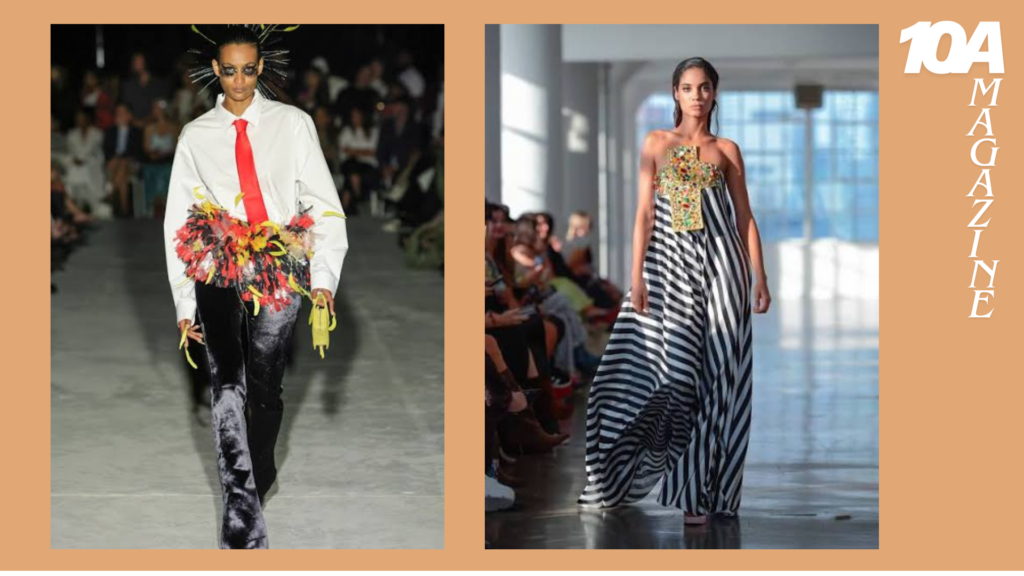
His collections draw from Chicano gang culture, migrant labor aesthetics, and working-class street style — and elevate them into luxury fashion without once apologizing for where they came from. Wide-legged trousers. Boxy silhouettes. Lace and blazers mixed together. It blurs masculinity and softness in a way that feels entirely intentional.
“I was tired of seeing a certain narrative perpetuated about who gets to be in fashion and who doesn’t.” — Willy Chavarria
That quote isn’t just quotable. It’s the entire thesis of the new Latinx fashion movement.
LUAR and Raul Lopez: Community as Couture
Brooklyn-born Raul Lopez started designing at age 12. His brand, LUAR, is what happens when New York City’s working-class energy meets high-concept fashion.
Describes Lopez as known for cutting-edge, avant-garde collections that lean toward the dramatic. His designs have landed on Dua Lipa and Rihanna — though Lopez himself would probably tell you the community wearing his clothes matters more than the celebrities.
That Luar was a finalist in the global LVMH Prize for young designers — one of fashion’s most competitive honors.
Lopez’s design language is rooted in his Dominican-American upbringing in Brooklyn. He watched his mother and aunties hit up thrift stores, mimicking high-end looks with affordable fabrics. He took that memory and turned it into a full aesthetic philosophy: elevating working-class style into luxury, and blurring class lines in the process.
His shows feel less like runways and more like block parties. Which, honestly, is better.
The Business Side: Representation Gaps and Real Opportunities
Here’s a hard truth wrapped in some optimism.
That fashion is a trillion-dollar global industry — but Latinos often lack access to enough capital to grow their businesses. The rich history of Latino fashion design has been largely absent from major fashion archives and mainstream coverage.
Edward Salazar Celis, a doctoral student in Latin American and Latino studies at UC Santa Cruz, put it plainly: “There are so many names that have been kept in the shadows in the history of fashion, from Latin America or Latinos in the U.S.”
But things are moving. The Latin American Fashion Summit (LAFS) hosted its annual summit in Miami’s Design District in November 2024. It brought together global industry leaders including buyers from Shopbop, executives from Moda Operandi, and senior figures from Saks Fifth Avenue and Bottega Veneta Americas. These aren’t small names. These are the gatekeepers — and they showed up.
Covered the Pitch to LAFS competition — an annual contest searching for the next great Latin American fashion talent, where finalists win money, trunk shows, mentorship, and global visibility.
Access to capital is still a challenge. But the infrastructure is being built.
Heritage, Not Costume: How Latinx Designers Use Culture
One thing separates great Latinx fashion designers from everyone else trying to borrow Latin aesthetics for a seasonal trend: they live it.
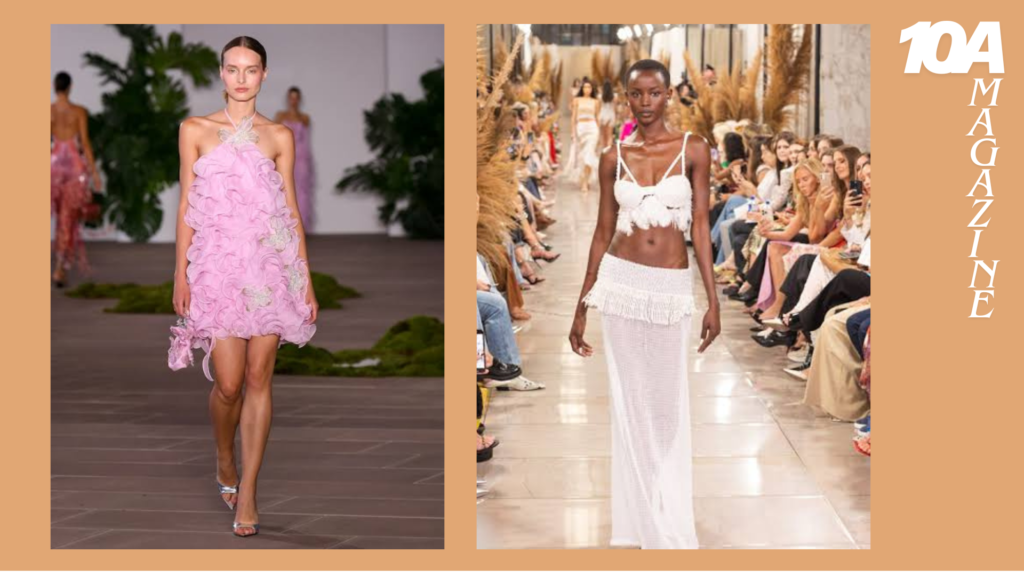
This clear — today’s Latinx designers don’t conform to any singular notion of what a Latinx designer should create. Some gravitate toward abstract artistic vision. Others lean into heritage as primary inspiration. Others use their craft to deconstruct cultural taboos while embracing the parts of Latinidad they love most.
- Patricio Campillo — Mexico City-based, LVMH Prize semi-finalist, drawing from ranchero culture with sharp tailoring
- Pamela Hernández (Cruda) — Costa Rican artist making handmade shoes from upcycled leather and wood using historical artisanal practices
- Marina Larroudé (Larroudé) — Brazilian-born, launched her shoe brand in 2021, now a fashion industry favorite known for patterned clogs and floral cowboy boots all made in a single factory in Brazil
- Gabriela Hearst — Uruguayan, sustainability-forward, globally celebrated
These aren’t designers inspired by Latin culture from the outside. They’re designers who are Latin culture, expressing it through craft.
The Identity Question: Latino, Latina, Latinx, Latine?
Let’s address the elephant in the room — or rather, the term in the headline.
He initially reacted with skepticism to “Latinx” but came to see it differently. He was raised Chicano — a word that was once a slur before being reclaimed. He sees “Latinx” the same way: brown people claiming their own identity on their own terms.
Does every designer identify with the term? No. And that’s okay. The diversity within the Latinx community is not a bug — it’s the entire feature. Cuban-Americans, Dominican-Americans, Mexican-Americans, South Americans — the experiences are different. The design languages are different. The fashion is richer for it.
The umbrella matters less than the designers underneath it.
What’s Next for Latinx Designers Fashion
The trajectory is clear. More visibility. More investment. More institutional recognition.
The CFDA (Council of Fashion Designers of America) has formally acknowledged Latinx design heritage through its support of the ¡Moda Hoy! exhibition. Major fashion competitions now actively seek Latin American talent. Accelerator programs specifically targeting Dominican, Mexican, and other Latin American designers are emerging.
The talent was always there. The question was always whether the industry would look for it.
It’s looking now.
Instagram to Follow:
- @runwaylatinx — Live runway and designer features
Final Word: This Isn’t a Trend
Here’s the thing about trends — they end. What Latinx designers are doing in fashion isn’t a trend. It’s a correction.
For too long, Latin American heritage was borrowed as aesthetic inspiration without credit, while the actual designers from those cultures were kept at arm’s length from major resources, archives, and platforms. That pattern is finally being interrupted.
By designers who use their clothes to say something true. By institutions that are slowly learning to look wider. By consumers who want to support creativity that has actual roots.
Latinx designers fashion isn’t just about what’s on the runway right now. It’s about who gets to tell their story through fabric, and why that story matters.