


Gaïa Jacquet-Matisse?
Let’s be honest — most of us carry zero famous artists in our family tree. Maybe a grandfather who painted fences, or an aunt who made pottery that never quite looked like what she said it was.
Gaïa Jacquet-Matisse carries Henri Matisse.
Yes, that Matisse. The French master who painted like colour itself owed him a debt.
Gaïa Jacquet-Matisse is a French-American actress, model, fashion designer, and socialite born on April 12, 1993, in Neuilly-sur-Seine, just outside Paris. She is, remarkably, the great-great-granddaughter of Henri Matisse — one of the most influential painters in modern art history. And if that wasn’t enough to make your head spin, she is also the step-great-granddaughter of Marcel Duchamp, the man who put a toilet in a gallery and called it art. (We are not making this up.)
You can follow her creative journey on Instagram at @gaia.matisse, where she shares her curatorial work, art world insights, and much more.
A Family Tree That Reads Like a Museum Tour
Before we get into Gaïa’s own life, we need a moment to appreciate the family she was born into — because this is genuinely extraordinary.
Her mother is Sophie Matisse, a contemporary artist and great-granddaughter of Henri Matisse. Her father was Alain Jacquet, a celebrated French pop artist widely known for introducing camouflage into art and fashion in the 1960s. His famous Camouflage series at the Alexander Iolas Gallery in New York was a landmark moment in the art world.
As Gaïa herself explained in an interview with Cultured Magazine:
“In 1993, the Centre Pompidou held a retrospective for Jacquet, and a couple months later I was born: Gaïa, meaning Mother Earth, his own living, breathing creation.”
She is also the great-granddaughter of Pierre Matisse and Alexina Duchamp, and her grandfather was Paul Matisse. The apartment where she was born in Neuilly-sur-Seine was originally a family apartment that had been passed down from Marcel Duchamp himself.
Growing Up Between Paris and New York
Gaïa did not have an ordinary childhood, and she will be the first to tell you so.
She spent her early years moving between two worlds — Parisian art studios and New York gallery openings. Summers were spent at the French countryside home of “Teeny,” the wife of Marcel Duchamp. As a child, she recalls preferring the museum gift shops to the galleries themselves. Honestly, relatable.
Her father, Alain Jacquet, had a studio that Gaïa remembers with deep warmth. In an interview with Demisch Danant Gallery, she recalled her favourite spot:
“Probably the bed… he had this canopy bed made out of New York City street scaffolding, so I would always climb it and have the best view of the entire studio.”
That is either the most artistic childhood memory ever, or a serious health and safety concern. Possibly both.
Loss, Acting, and Finding Her Voice
When Gaïa was just 15, her father Alain Jacquet passed away from esophageal cancer. It was a devastating blow for the teenage girl who had grown up watching him create. According to W Magazine, it was at a BCBG dinner that she met actor Mickey Rourke, who introduced her to acting teacher Elizabeth Kemp.
That introduction changed everything.
Gaïa threw herself into method acting, using personal grief to connect with her characters. Her teacher, Elizabeth Kemp, recognised her talent immediately — describing her creative instrument as “free and powerful.” In class, Gaïa embodied characters like Francis Farmer, Amy Winehouse, and even Sid Vicious.
Yes, Sid Vicious. Elizabeth Kemp reportedly said she did not see a woman — only the character. That is extraordinary praise.
This period of her life shows something important: Gaïa Jacquet-Matisse is not just riding on her family name. She put in the real, often painful work.
Education: More Than Just a Famous Last Name
Gaïa attended Eleanor Roosevelt High School on the Upper East Side of Manhattan — a public school she affectionately called “El-Ro.” She later went on to study at New York University’s Gallatin School of Individualized Studies, where she earned degrees in Eastern Psychology and Integrative Performance.
That combination — psychology and performance — is not as random as it sounds. It gave her a framework for understanding human emotion, identity, and behaviour. These are tools she has carried into both her acting and her design work.
As she explained in an interview with First Generation Fashion, her parents gave her the freedom to find her own path without the weight of expectation:
“They let me have the freedom to express myself.”
Acting Career: Films and Short Projects
Gaïa Jacquet-Matisse has appeared in several film and theatre productions, including:
- Mumbai Chopra: Misadventures of an It Girl (2010)
- My Butterfly (2011)
- Forgetting Sandy Glass (2016/2017)
She has also taken on stage roles and short film projects throughout her career. While Hollywood has not yet given her the spotlight her talent deserves, her method acting background makes her a compelling presence on screen.
You can find her filmography listed on IMDb.
Fashion: From Runway Walks to Her Own Brand
Gaïa’s relationship with fashion runs deep — not as a hobby, but as a genuine creative expression.
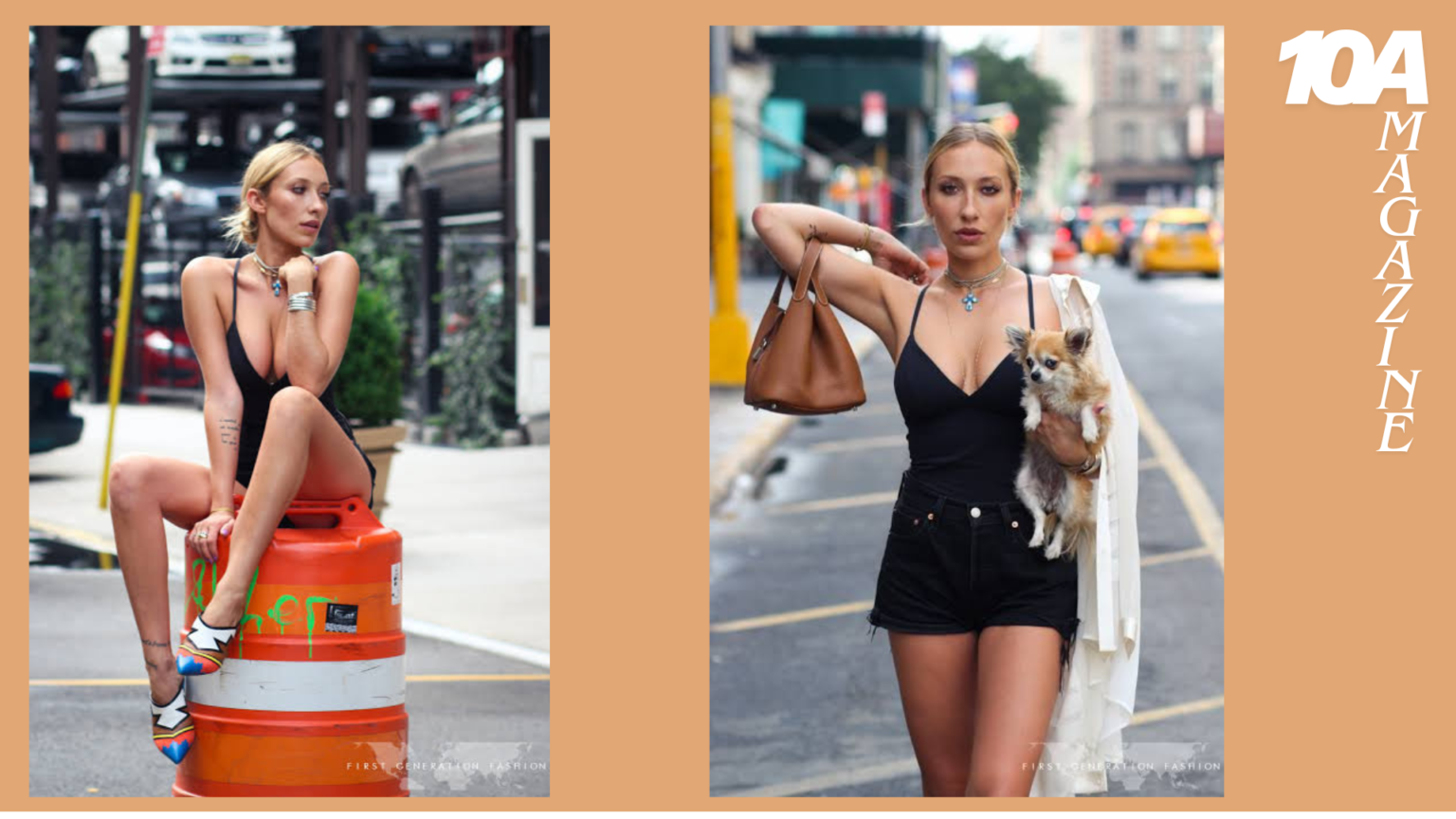
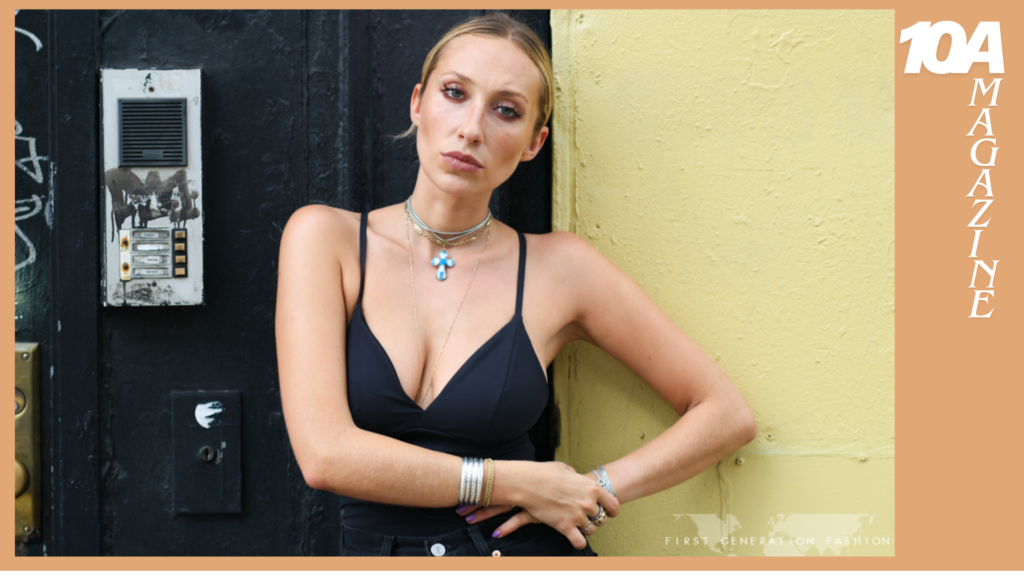
In 2016, she walked the runway at New York Fashion Week for designer Just Drew, alongside a memorable lineup that included Tiffany Trump and Kyra Kennedy. In August 2018, she was photographed for Reed Krakoff’s Paper Flowers collection for Tiffany & Company — one of the luxury brand’s most talked-about campaigns that year.
That same year, Gaïa launched AA, her own line of handmade accessories. The brand reflects her background in art and her eye for detail — pieces that feel personal rather than mass-produced.
She has been photographed at major events including Art Basel and New York Fashion Week alongside names like Paris Hilton, EJ Johnson, Andrew Warren, and Reya Benitez.

Art Curation and the Pier 69 Project
Beyond acting and fashion, Gaïa has stepped into the role of art curator and advisor, a natural extension of the world she was raised in.
Her Instagram bio currently describes her as a Curator and Advisor, and she serves as VP of Comity for the Alain Jacquet official account — actively preserving and promoting her late father’s artistic legacy.
She has also spoken about Pier 69, a personal project described as a platform for projecting her own visions of the Earth and building a collective consciousness of positivity through art.
In her own words from Cultured Magazine:
“Pier 69 is very close to my heart, which will captivate the essence of Gaïa, projecting my own visions of this Earth, hoping to inspire and create a collective consciousness of positivity and change for the future, evidently through art.”
The Weight of a Legacy — and How She Carries It
Here is where Gaïa Jacquet-Matisse becomes genuinely interesting as a public figure.
She grew up in a family where greatness was not just expected — it was almost unavoidable. Her mother faced enormous pressure as a painter and direct descendant of Henri Matisse. And yet, Gaïa speaks about her own relationship with that legacy with unusual self-awareness.
As she told First Generation Fashion:
“When I was growing up, it was always a hushed thing. You don’t talk about the fame; you don’t talk about money; you don’t talk about a name.”
She has also been refreshingly candid about the years it took her to truly appreciate the art she was surrounded by. That kind of honesty is rare in circles where names open doors before personalities even walk through them.
It took her many years, she says, to appreciate the Matisse and Jacquet legacies fully. But when she did, everything changed.
What Makes Gaïa Jacquet-Matisse Stand Out?
Let’s take a step back and think about what actually makes this person worth writing about — beyond the family name.
First, she chose fields that require vulnerability: acting and fashion. Both involve rejection, criticism, and very public failure. She did not take the easier path of simply curating her image behind a family crest.
Second, she studied seriously. Eastern Psychology and Integrative Performance at NYU is not a lightweight curriculum. She built a real intellectual foundation.
Third, she is actively working to preserve her father’s legacy through curatorial work and advocacy — not just benefiting from it.
Fourth, she launched a physical product business, AA accessories, in 2018. That requires supply chains, pricing, branding, and a business brain — things that have nothing to do with who your great-great-grandfather was.
Quick Facts: Gaïa Jacquet-Matisse at a Glance
| Detail | Information |
|---|---|
| Full Name | Gaïa Jacquet-Matisse |
| Date of Birth | April 12, 1993 |
| Birthplace | Neuilly-sur-Seine, France |
| Nationality | French-American |
| Parents | Sophie Matisse (mother), Alain Jacquet (father) |
| Famous Ancestor | Henri Matisse (great-great-grandfather) |
| Education | NYU Gallatin School – Eastern Psychology & Integrative Performance |
| Career | Actress, Model, Designer, Art Curator |
| Fashion Brand | AA (handmade accessories, launched 2018) |
| @gaia.matisse |
Final Thoughts
Gaïa Jacquet-Matisse exists at a genuinely unusual intersection: art royalty meets modern hustle.
She could have done nothing and still been written about in glossy magazines. Instead, she studied psychology, trained in method acting through personal grief, launched a fashion brand, walked Fashion Week, worked with Tiffany & Company, and now dedicates significant energy to preserving and promoting her father’s artistic legacy.