



The Man Who Made Men’s Fashion Fearless
Let’s be honest. Most men in the 1960s wore suits, kept their shirts buttoned, and called it a day. Then came Mick Jagger — in a puff-sleeved dress, a sequined jumpsuit, and a choker necklace — and nothing was ever the same.
Mick Jagger’s fashion style is not just a rock music footnote. It is a living, breathing template that designers, stylists, and artists have borrowed from for over six decades. From W Magazine to i-D, every major fashion publication has covered his influence. And they keep coming back — because the looks keep holding up.
So what exactly made Mick Jagger’s style so powerful? And why does it still matter in 2024? Let’s break it down, decade by decade, look by look.
The 1960s: From Schoolboy Suits to Swinging London Dandy
Mick Jagger did not arrive on the scene with a fashion plan. In the early days of The Rolling Stones, he wore whatever he had. As he told journalist Tim Blanks about those formative years: “In the beginning, we just wore what we had.”
Simple. Honest. And about to change very quickly.
By the mid-60s, Jagger had found his footing on the fashion map of London. Style hubs like Carnaby Street and King’s Road were buzzing with creativity, and Jagger soaked it all in. He adopted the foppish dandy aesthetic — undone silk shirts, slim gingham trousers, ruffled collars, lace-up boots, and the kind of effeminate scarves that most men at the time would not dare touch.
His relationship with singer Marianne Faithfull deepened this look. Together, they became the face of the Swinging Sixties. Think cropped patterned suits, top hats, and brocade — decadent without going fully theatrical.
Then came the moment that changed everything.
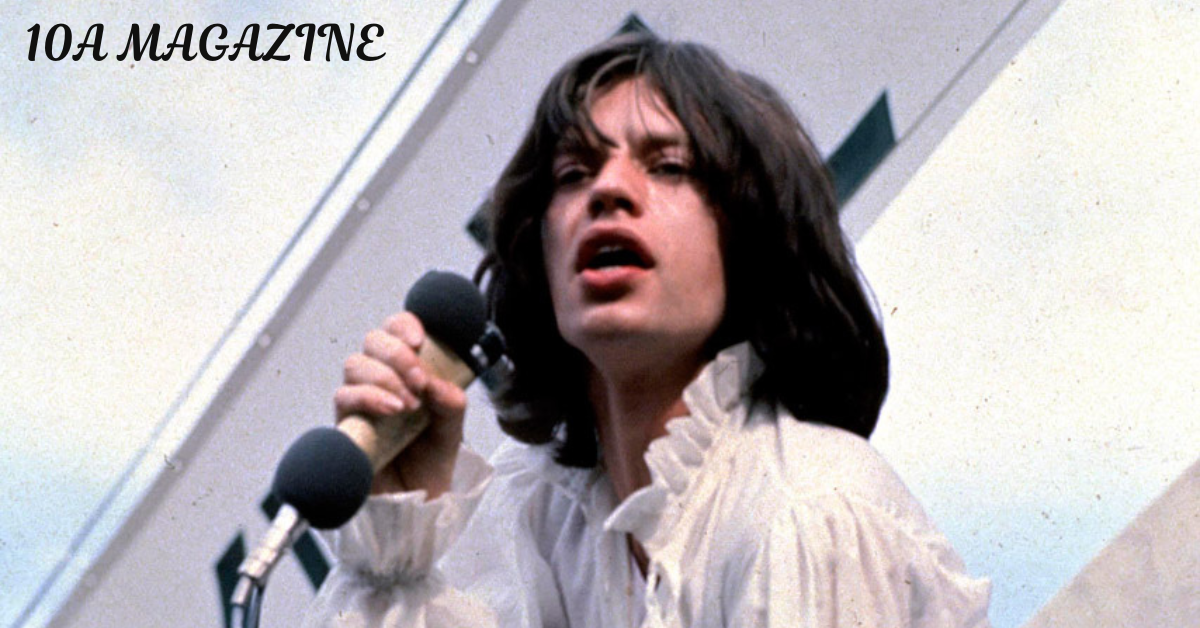
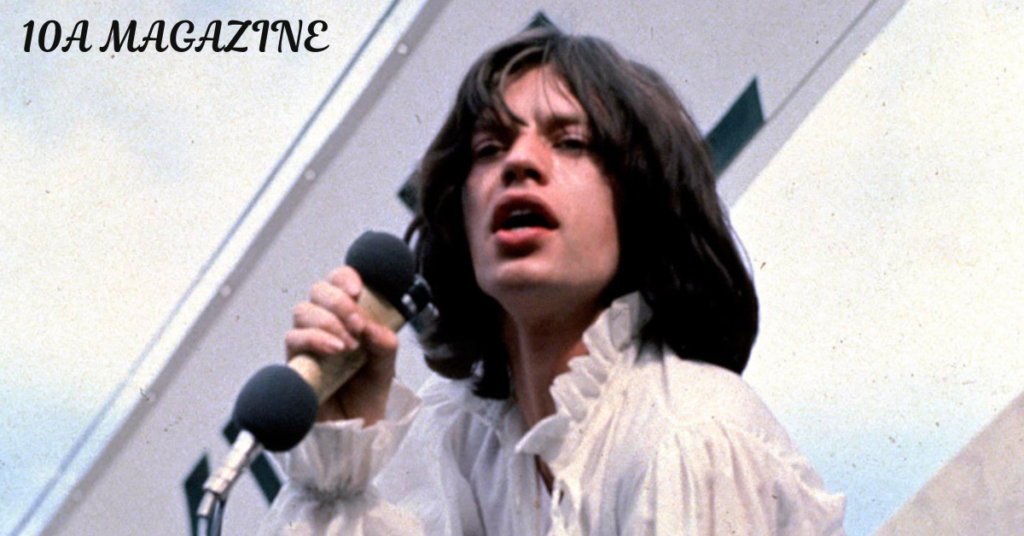
On July 5, 1969, just 48 hours after the death of Rolling Stones founding member Brian Jones, Jagger stepped onto a stage in Hyde Park in front of over 250,000 people. He was wearing a white puff-sleeved tunic dress designed by Michael Fish — a piece specifically made to be worn by men as part of fashion’s so-called “Peacock Revolution.” He paired it with a spangled choker necklace, and opened the concert by reading lines from Percy Bysshe Shelley’s elegy, Adonais.
It was androgyny meets poetry meets rock and roll. And it cracked open a door in men’s fashion that has never fully closed. As NSS Magazine noted, that Hyde Park look even prompted David Bowie to experiment more boldly with costume and character.
The 1970s: Jumpsuits, Glitter, and the Blueprint for Rock Glamour
If the 60s were Jagger finding his voice in fashion, the 70s were him screaming it from the rooftop — in a bedazzled jumpsuit, naturally.
This decade gave us what many consider the defining chapter of Mick Jagger’s fashion style. His collaboration with British designer Ossie Clark became the cornerstone of his stage wardrobe. As Jagger himself said in Another Man magazine: “He was very clever at thinking things through. He made those velvet jumpsuits, and that was the beginning of people making me things specifically for onstage.”
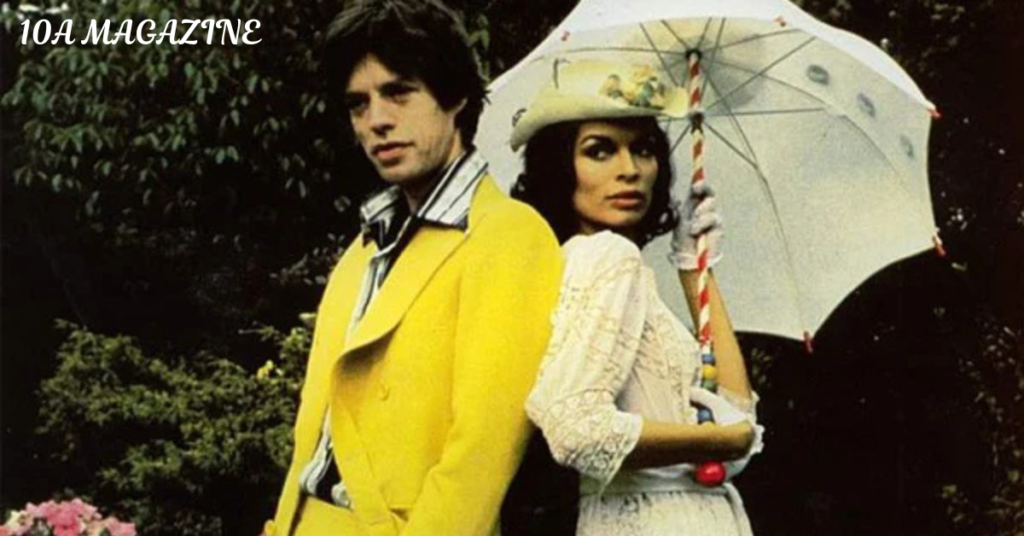
Clark’s bespoke pieces — silk shirts open to the navel, lace-up leather, rhinestones, velvet one-pieces — became Jagger’s second skin. He wore them on the Stones’ 1973 world tour. He wore them on aeroplanes with Bianca. He wore them because they made sense in a way that conventional men’s clothing simply did not.
His 1971 wedding to Bianca Jagger in Saint-Tropez also became a fashion landmark. Mick wore a cream suit with a patterned shirt, his signature shag hairstyle intact, sneakers peeking from under his trousers. The House of Nutter — the Savile Row tailors famous for dressing The Beatles — reportedly influenced the design. It was formal meets rock and roll, and it worked brilliantly.
In 1976, Jagger went even further with a ringmaster-inspired ensemble: diamond-covered rugby trousers, a cropped pink vest, and a knot shirt. By this point, he was not just dressing for concerts. He was dressing to make cultural statements.
The shark collar shirts were another 70s staple — wide spread collars paired with wide-lapelled jackets, rewriting businesswear for a rock era and exposing precisely the right amount of chest. The look required aviator sunglasses. Always.
The 1980s: Streetwear Arrives (Before Anyone Called It That)
Most style icons fade in the 80s. Jagger got weirder, and in doing so, got ahead of the curve again.
The boxy high-waisted jeans arrived. The Chelsea boots gave way to trainers. In a move that almost nobody saw coming, Jagger appeared in the 1985 music video for Dancing in the Street — recorded with David Bowie — wearing a pair of Reebok Freestyle sneakers. At the time, these were symbols of the aerobics craze sweeping the decade. On Jagger, they looked like a deliberate fashion choice.
Crop tops also made an appearance during this era. Not ironically. Not as a statement. Just… because Jagger felt like it. This is a man who wore crop tops on tour decades before TikTok made “crop tops for boys” a trending topic.
The 80s also saw the emergence of a tougher aesthetic — American football pants, jockstrap detailing, bold sportswear silhouettes. Fashion historians now point to Jagger as one of the earliest adopters of what we now call streetwear, and he did it entirely by instinct.
Key Designers Behind the Mick Jagger Fashion Style
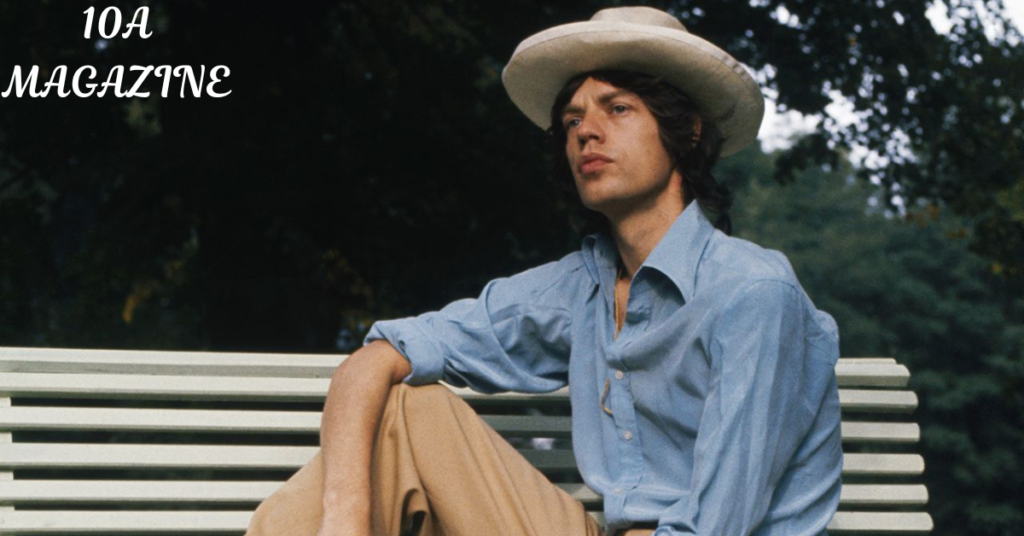
Jagger did not build his wardrobe alone. A string of designers shaped and sharpened his look over the years.
Ossie Clark was perhaps the most important collaborator, producing the velvet jumpsuits and tailored pieces that defined the 70s stage looks.
Michael Fish designed the famous Hyde Park dress — a gender-bending moment that rippled through decades of fashion.
L’Wren Scott, Jagger’s long-term partner, later became a key figure in shaping his red carpet appearances, designing heavily embellished blazers that reflected his more sophisticated later-era style.
In terms of his personal preferences, Jagger has been consistently direct. In an interview featured by Another Man, he admitted: “Certain designers fit me better, like Margiela and Lanvin. There are too many alterations with other designers.”
Practical. Specific. Very Jagger.
His affection for Gucci, Saint Laurent, and custom-made pieces has also been well-documented. He understood early that great tailoring is not a luxury — it is a tool.
Accessories: The Secret Weapon of Mick Jagger’s Look
You cannot talk about Mick Jagger’s fashion style without talking about accessories. He understood their power before most stylists had even started thinking about it.
The chunky pinky ring was a constant. At a famous 1972 party at the Playboy Mansion, he layered huge statement necklaces — a black and white beaded number, a jazzy cross on a chain — over a halterneck turquoise graphic vest. The look should not have worked. It absolutely did.
Silk scarves, used as belts or neck pieces, became a signature. Platform footwear, unique boots, and eye-catching shoes were always part of the equation. Blue eyeshadow — applied casually, not theatrically — completed many of his most iconic 70s stage looks.
The lesson here is simple: Jagger used accessories to tell the rest of the story. The outfit gave you the character. The accessories gave you the personality.
Mick Jagger’s Fashion Influence Today
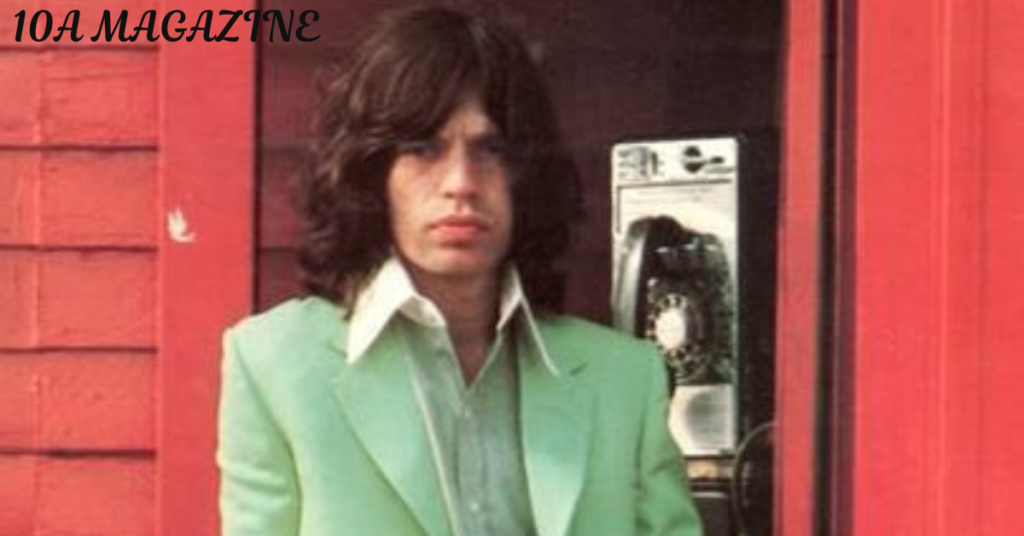
Here is where things get genuinely fascinating. Decades after his peak years, Mick Jagger’s fashion style is still actively shaping what people wear.
Harry Styles is the most frequently cited example. The comparisons are everywhere, and Jagger himself has acknowledged the connection — though characteristically, he was measured about it. In an interview with The Sunday Times, he said: “I like Harry — we have an easy relationship,” while noting he personally wore considerably more eye makeup in his early days.
As NSS Magazine put it, the popularity of artists like Harry Styles and bands like Måneskin today exists partly because a pioneer like Jagger laid the groundwork. The aesthetic of designers like Hedi Slimane at Saint Laurent and later Celine also draws directly from the lean, sharp, androgynous rock silhouette that Jagger inhabited so naturally in the 70s.
Leather pants, flowing scarves, extravagant shirts — as Fifties Web observes, these were once his personal signatures. Today they are staples of mainstream rock fashion.
The Rolling Stones logo — the famous lips and tongue — also launched the era of music merchandise as a legitimate fashion category. That logo on a T-shirt is as recognizable as any luxury brand monogram.
What Makes Mick Jagger’s Style Timeless?
It is easy to say someone has “iconic style.” It is harder to explain why it lasts. With Jagger, there are a few clear reasons.
He never followed. He happened to match. Jagger did not look at trends and dress accordingly. He dressed from instinct — and often arrived at the trend before the trend arrived. Crop tops, sneakers, gender-fluid dressing, statement accessories — he was there first, every time.
He mixed high and low without overthinking it. As W Magazine noted, whether Jagger picked up clothes from designer racks, the women’s section of a department store, or flea markets, it always felt completely natural on him. That ease is almost impossible to fake.
He understood the costume’s role. As he told Another Man: “The costume helps you be the performer, but it also helps you keep your feet on the ground when you take it off.” That is not just fashion wisdom — it is life wisdom.
He committed fully. There was never a half-hearted look. Even his most outrageous outfits were worn with total conviction. That confidence is, arguably, the most important style tip anyone can take from Mick Jagger.
How to Dress With Mick Jagger’s Energy (Without the Jumpsuit)
You do not need to own a sequined Ossie Clark one-piece to channel Mick Jagger’s fashion philosophy. According to Vintage Clothing Guides, the key elements are more accessible than you think.
Start with a well-fitted skinny suit — ideally in a subtle pattern like pinstripes or a windowpane check. Tailoring and fit are non-negotiable. Then add bold accessories: a statement ring, a silk scarf worn loosely, a chunky necklace. Footwear should be distinctive — platform boots, Chelsea boots, or something that makes people look twice.
Mix casual and formal deliberately. A graphic tee under a tailored blazer is very Jagger. So is pairing structured trousers with a looser, open-collar shirt. The goal is to look like you made considered choices while appearing entirely effortless.
And embrace colour. Jagger never hid behind black and grey. He wore turquoise vests, gold crop tops, red latex suits, and cream wedding ensembles. Colour was not a risk for him — it was a vocabulary.
Follow Mick Jagger on Instagram
Want to see what the man himself is up to today? Mick Jagger is active on Instagram at @mickjagger, where he shares updates on his music, tours, and personal life with over 4 million followers.
Free Copyright-Free Images for This Article
If you are publishing this article on WordPress and need free-to-use images, here are trusted sources for related visuals:
- Wikimedia Commons — commons.wikimedia.org — Search “Mick Jagger” or “Rolling Stones” for historical photos with verified licensing.
- Unsplash — unsplash.com — Search for rock music, concert, or vintage fashion imagery.
- Pexels — pexels.com — Free commercial-use photography for editorial contexts.
- The Library of Congress — loc.gov/photos — Contains public domain rock music imagery from the 60s and 70s.
Always check individual image licenses before publishing, as some historical photos may have specific usage restrictions.
References and Trusted Sources
All information in this article is drawn from verified, reputable sources:
- W Magazine: There’s a Reason Everyone Still Copies Mick Jagger’s Style
- i-D: 7 of Mick Jagger’s Most Iconic Outfits
- Another Man Magazine: Mick Jagger on the Outfits That Have Helped Him Shapeshift Through the Ages
- NSS Magazine: 5 Ways Mick Jagger Influenced Men’s Fashion
- Hunger Magazine: Unpacking Mick Jagger’s Iconic Style on His 80th Birthday
- Vintage Clothing Guides: How to Dress Like Mick Jagger
- Fifties Web: Mick Jagger’s 1960s Style and Fashion
- Today.com: Mick Jagger Has Some Things to Say About Those Harry Styles Comparisons