


Let’s be honest. When a European man walks into a room, something happens. People notice. It’s not magic. It’s not cologne (though that helps). It’s the way he’s dressed with intention, confidence, and a quiet sense of purpose that no fast-fashion haul can fake.
European male fashion is one of the most studied, copied, and admired dress codes in the world. And yet, it’s also one of the most misunderstood. It’s not about spending a fortune. It’s not about looking stiff or overdressed. It’s about knowing what fits, what lasts, and what actually says something about who you are.
This guide breaks it all down the history, the regional differences, the 2026 trends, and the practical wardrobe moves any man can make today.
What Makes European Male Fashion Different?
There’s a reason men from New York to Tokyo look to Paris, Milan, and London for style cues. It goes deeper than geography.
European men, broadly speaking, dress with a certain edited quality. They don’t throw everything at the wall and hope something sticks. The wardrobe of a typical European man tends to be built around traditional suits, jackets, and well-fitted trousers with a preference for darker, quieter tones like navy, charcoal, and black as a foundation, then layered with moments of colour in accessories (Hockerty).
What really separates European style is the principle of fit above everything else. A €40 linen shirt that fits perfectly looks better than a €400 shirt that hangs wrong. That’s not an opinion. That’s the European rule of style.
A Brief History: Where This Style Actually Comes From
European menswear didn’t appear overnight. It evolved over centuries shaped by wars, trade, courts, and culture.
The history of European men’s fashion stretches back through eras that defined the Western wardrobe. By the 17th and 18th centuries, France had become the undisputed cultural capital of Europe, and its court at Versailles dictated fashion for the entire continent. The coat, waistcoat, and breeches combination that emerged from that period essentially gave birth to the modern suit (HiSoUR).
Then came the 19th century the age of the frock coat, the emergence of the pantaloon, and the rise of British tailoring culture on Savile Row. Beau Brummell, arguably the world’s first male style icon, gave London its reputation as the home of the gentleman’s wardrobe (Fashion History Timeline, FIT).
By the 20th century, designers like Giorgio Armani completely reinvented what masculine fashion could be focusing on tailored shapes that prioritised elegance without the stuffiness of what came before (Attire Club).
All of that history lives in every well-cut European jacket today. That’s not nostalgia. That’s context.
The Three Big Regional Styles (And Why They Matter)
European male fashion is not one thing. It’s at least three distinct schools of thought, each shaped by climate, culture, and a healthy dose of national pride.
🇮🇹 Italian Style: Confidence Tailored to the Body
Italian men dress like they know they’re being watched. And honestly, they’ve earned it.
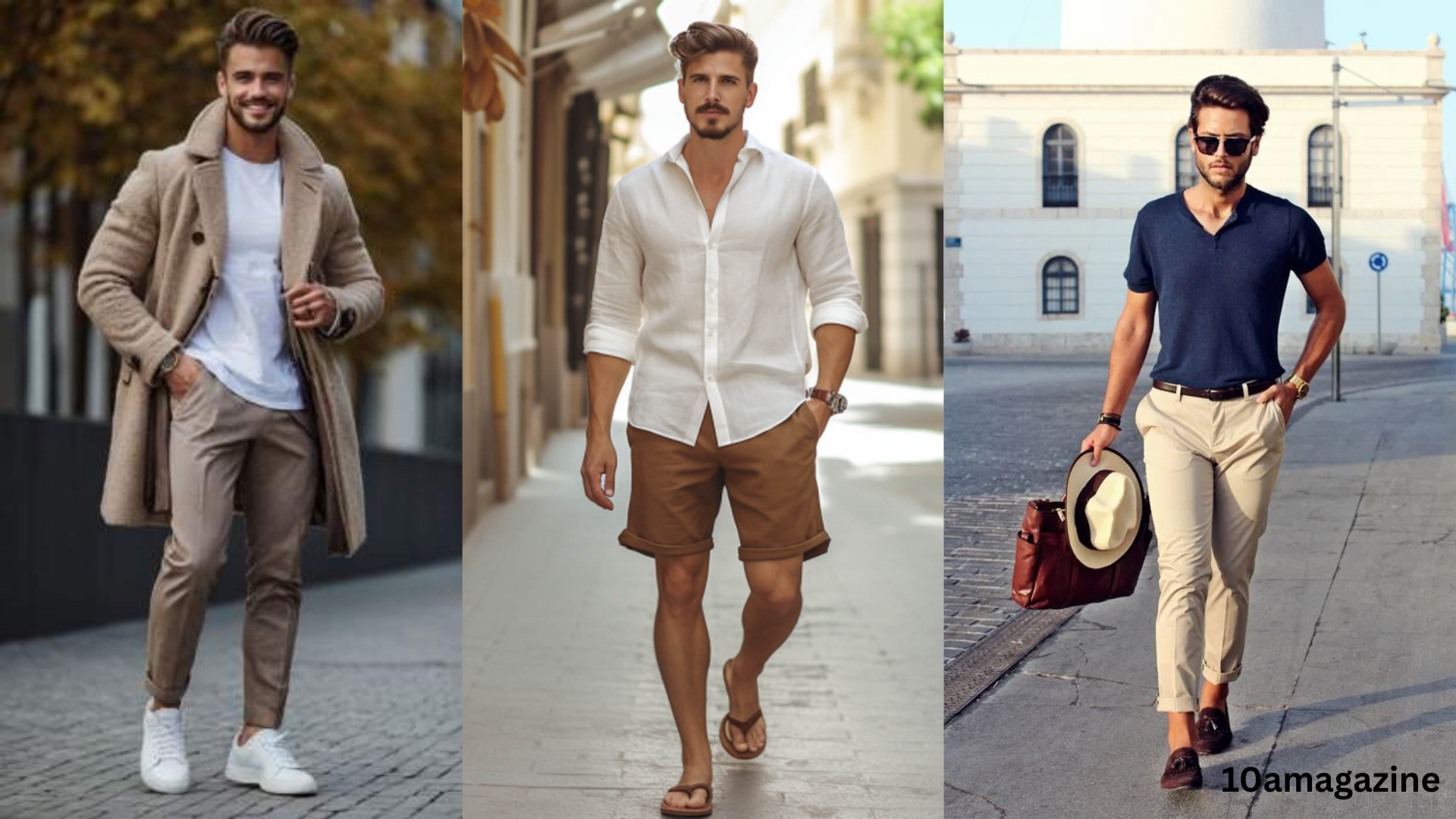
Italian style prioritises fit, craftsmanship, and what the Italians call bella figura the art of making a good impression through appearance. Suits tend to be single-breasted with a V-shaped jacket, short and sleek silhouettes, and flapless pockets that sit snug to the body (Real Men Real Style). Linen and lightweight cotton dominate in warmer months because nobody in Milan is suffering through a thick wool jacket in July.
In everyday life, an Italian man in the city typically wears slim-fit chinos, a crisp linen shirt with an open collar, an unstructured blazer, and leather loafers. Simple. Deliberate. Devastating.
🇫🇷 French Style: Effortless Without Trying (Which Takes Enormous Effort)
The French have perfected the art of looking like they got dressed in two minutes while actually spending twenty.
French men’s fashion prioritises understatement, proportions, and what the French call je ne sais quoi an ineffable elegance that resists direct explanation. French suits are known for their cran parisien (the Parisian lapel notch), a detail that the British, Italians, and Americans have tried and failed to fully replicate (Business Traveller).
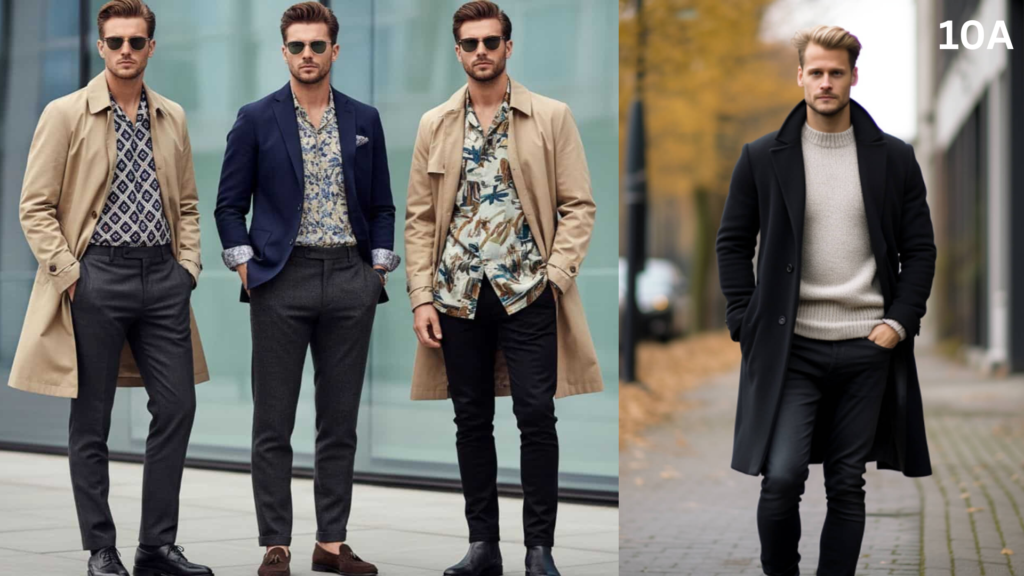
Everyday French dressing leans toward straight jeans, a plain tee or Breton stripe, a wool overcoat or blazer, and minimalist sneakers or boots. No logos. No fuss. Impeccable.
🇬🇧 British Style: Structure, Tradition, and a Glorious Stubbornness
British men dress like they invented the rules because for a lot of them, they did.
The British suit is built for structure. It features tapered shoulders, higher armholes, two side vents, and thick shoulder padding. British tailors favour wool, corduroy, and tweed fabrics that originated in the Scottish countryside and were designed to survive actual weather (Business Traveller).
The British country look argyle knits, waxed jackets, brogues has become a global fashion reference. Savile Row remains the beating heart of bespoke men’s tailoring, and that tradition hasn’t moved an inch since the 18th century. Which is either admirable or deeply stubborn, depending on your view.
European Men’s Fashion Trends for 2026
So what’s actually happening on the runways and streets of Europe this year?
1. Quiet Luxury Is Out. Loud Confidence Is In.
Quiet luxury that muted, neutral-palette aesthetic that dominated 2024 and 2025 is losing its grip. The runways are pushing back with what some are calling “loud luxury”: maximalism, rich textures, statement pieces, and a general refusal to disappear into the background (Style Arcade).
2. Rock-Dandy Is Back (With Better Posture)
After several seasons of preppy and understated looks, the rock aesthetic made a strong return at Fall/Winter 2026–2027 shows. But this time it arrived with more intelligence. At Dior, Dries Van Noten, and Prada, men channelled something closer to a cursed poet than a guitar hero slender silhouettes, weathered leathers, and brooding details that felt literary rather than just loud (Numéro).
3. Soft Tailoring Takes Over Everyday Dressing
One of the most practical shifts in European menswear right now is the move toward soft tailoring suits and blazers designed for all occasions, not just boardrooms and weddings. These are relaxed-structured jackets that look sharp without demanding effort (Percival Menswear).
4. Textured Fabrics: Mohair, Yak Wool, and Knit Cardigans
Texture is having a serious moment. Fuzzier, tactile fabrics like mohair and yak wool blends are appearing across European menswear materials that manage to look high-end and relaxed at the same time. Proper, substantial knit cardigans are also making a return not the flimsy kind, but the real, structured ones that actually keep you warm and make you look like a man who has his life together (Percival Menswear).
5. Pleated Trousers: The Underdog Makes Its Move
Pleats are back and they deserve an apology from everyone who dismissed them. Done right, pleated trousers add length to the leg, improve comfort, and bring a quiet classicism to any outfit that flat-front trousers simply can’t match (Percival Menswear).
6. Faux Fur and Bold Outerwear
Faux fur appeared across Fall/Winter 2026 shows in Milan and Paris on oversized coats, generous collars, and statement pieces that gave silhouettes weight and warmth. This isn’t a subtle trend. It’s a commitment (Numéro).
The European Male Wardrobe: What Actually Belongs in It
You don’t need a full Prada collection to dress like a European man. You need the right pieces.
The Foundations:
- One unstructured blazer in navy or stone
- Two pairs of well-fitted trousers (one tailored, one chino)
- Three quality shirts (one white, one blue, one subtle pattern)
- One linen suit for warmer months
- One heavyweight knit cardigan
Shoes (Because Europeans Take Shoes Seriously): Footwear is central to European male fashion. From sleek leather dress shoes to quality minimalist sneakers, the investment in good shoes signals everything about how a man approaches dressing (Hockerty). Italian leather shoes typically Blake-stitched, slim, and elegant are a considered investment. British brogues offer heritage and weather-readiness. Both are correct.
The Bag: European men carry a messenger bag or a structured leather tote not a fanny pack. That distinction matters more than it should, but here we are (Hockerty).
Monochromatic Dressing: One of the most useful tricks in European men’s style is dressing in tonal shades of the same colour. It creates a sleek, streamlined appearance, visually elongates the body, and removes a lot of the daily decision-making that leads men to wear the same grey hoodie for the fifth time this week (Hockerty).
What the Runways Say vs. What Real Life Requires
Here’s something worth being honest about: runway fashion and street fashion are two different conversations.
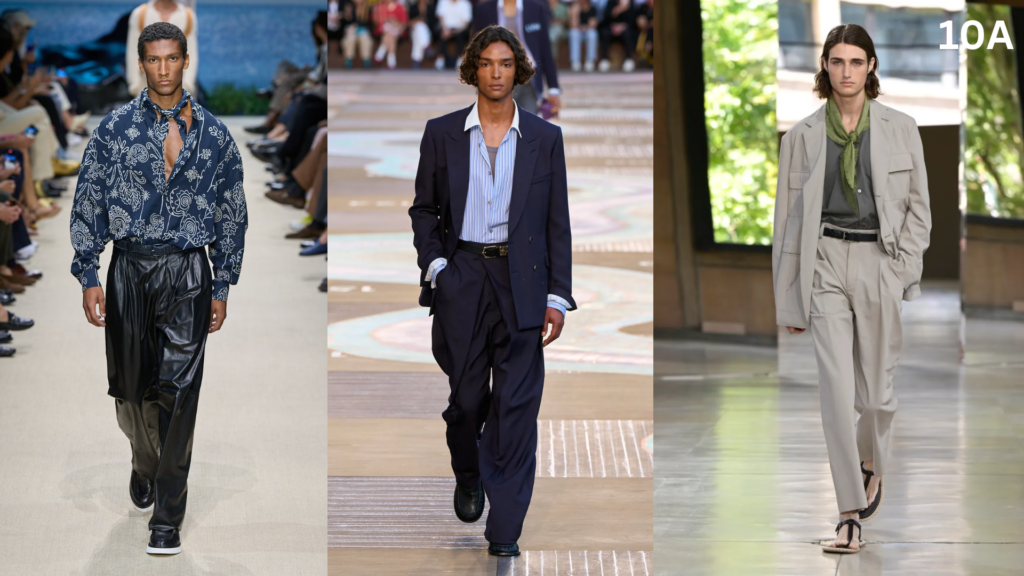
The Summer 2026 collections from Paris and Milan showed designers playing with bold contrasts between structure and ease, between concealment and reveal, between the past and an imagined future. Houses like YSL, Dior, and Prada used their shows to define new paradigms of masculine elegance (Gulf News).
Meanwhile, the men of Milan, Paris, and London are still largely wearing well-cut basics with one interesting piece. That gap between the runway and reality is where most men actually live and it’s a perfectly good place to be.
The practical takeaway from the 2026 shows isn’t “buy a sequin tank top.” It’s: dress with more intention, choose a stronger colour moment, and don’t be afraid of a little texture.